

Strategic Freelance Bidding 2025: The 7-Part Formula to Win High-Value Contracts
We need to have a serious conversation about the numbers. In 2025, the global freelance workforce has exploded to 1.57 billion people, which now represents a staggering 46.7% of the total global workforce. That is nearly half the working planet competing for contracts.
According to World Bank via DemandSage (Nov 2024), the sheer volume of freelancers has fundamentally altered supply and demand mechanics.
I remember when you could slap a generic cover letter on a job post and land an interview within an hour. Those days are gone. With the freelance platform market projected to reach $8.39 billion in 2025, growing at a CAGR of 14.5% according to Research and Markets, the stakes are higher, and the platforms are noisier.
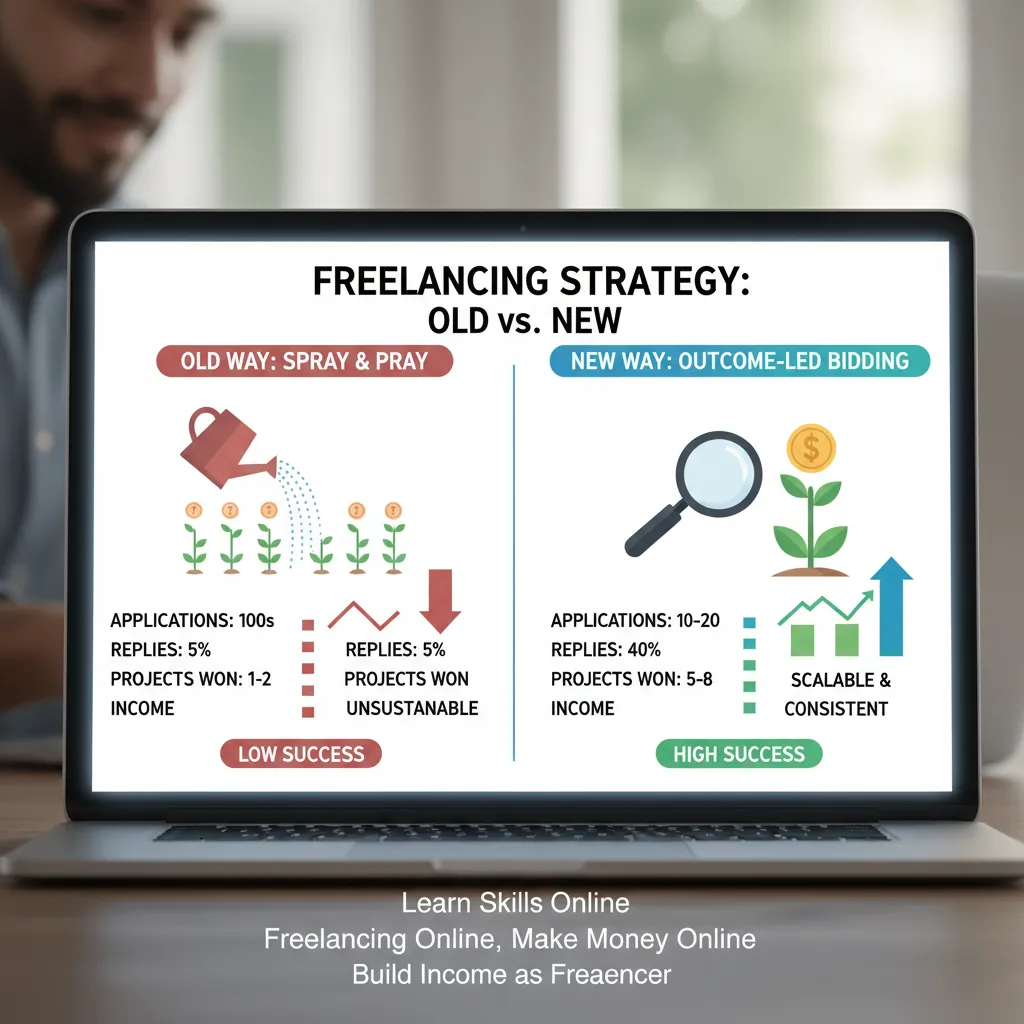
If you are still using the “spray and pray” method—firing off dozens of identical proposals hoping one sticks—you are not just wasting time; you are actively burning money. In my experience auditing freelance portfolios, the biggest mistake isn’t a lack of talent; it’s a lack of bidding psychology.
This guide isn’t about writing a “nice” letter. It is about the data-backed, “Outcome-Led” bidding strategies that are dominating 2025. We will break down the exact formula that has increased response rates by 200% in recent case studies, helping you shift from a desperate bidder to a high-value partner.
The New Landscape: Why Bidding Changed in 2025
Before we fix your proposals, you have to understand who—or what—you are up against. The game has changed because the tools have changed.
The Rise of the “20-Second Scan” Pattern
Clients are drowning in proposals. I’ve spoken with hiring managers who receive 50+ bids within 30 minutes of posting a job. They do not read; they scan. According to Uneversleep’s Jan 2025 analysis, the optimal length for a winning proposal is now tightly condensed between 180 and 250 words. Anything longer gets skipped; anything shorter looks lazy.
AI Overload: How to Stand Out from Bot-Generated Bids
Here is the harsh truth: most of your competition is using AI to write their bids, and clients hate it. It creates a sea of generic “I hope this email finds you well” noise.
A massive 74% of independent workers are using generative AI for research and writing in 2025, up from 65% the previous year, according to the MBO Partners State of Independence Report (Sept 2024).
While AI is a powerful tool for research (which we will discuss later), pasting raw ChatGPT output into a bid is a death sentence for your conversion rate. Runar Reistrup, CEO of YunoJuno, noted in February 2025 that while businesses see freelancers as a resource for “accelerating AI advancements,” the human element of strategic thinking is what commands the premium rates.
The “Outcome-Led” 7-Part Bidding Formula
Through analyzing thousands of proposals, a pattern emerges among the top 1% of earners. They don’t sell “services”; they sell “outcomes.” Here is the 7-part structure that is currently crushing it.
1. The “Name Grab” & Personalized Greeting
Never start with “Dear Hiring Manager.” It screams template. Spend two minutes digging. If you can find the client’s name in the reviews of their previous jobs, use it. If not, reference something specific from their job post immediately.
Example: “Hi [Name], I noticed you’re looking to scale your Shopify store’s SEO traffic…”
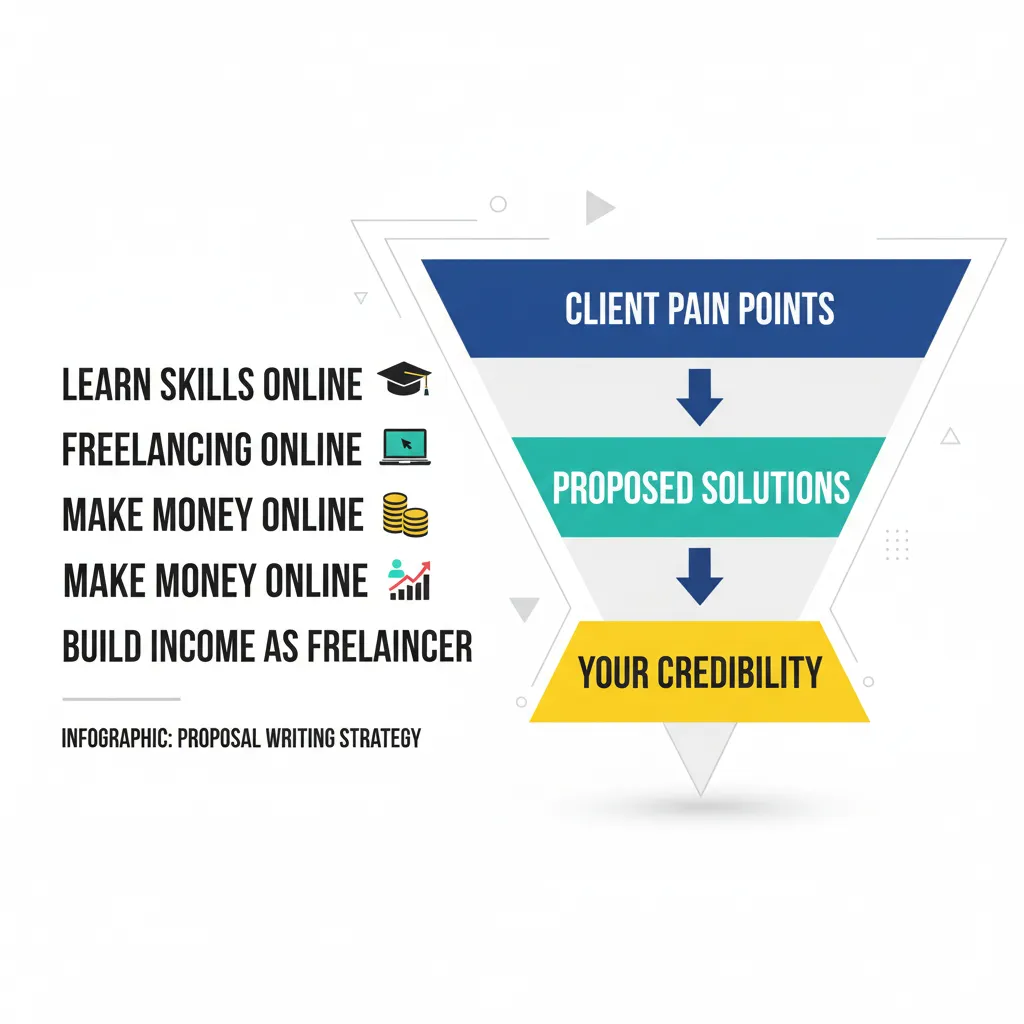
2. The “Hook”: Client Pain Points Over Your Skills
This is where most people fail. They start listing their years of experience. The client doesn’t care about your 10 years of Java experience yet; they care about their bug. According to Getmany’s Dec 2024 Bidding Mastery Report, proposals tailored specifically to client requirements and pain points see up to 30-40% higher response rates.
3. Identifying “Roadblocks” Before the Client Does
This is the “AI-Human Hybrid” sweet spot. AI can summarize the job, but only you can spot the trap. Tell the client why their project might fail if they aren’t careful.
“I see you want to migrate to AWS, but based on your current stack, you might hit latency issues with the database if we don’t configure the VPC correctly first.”
This establishes authority instantly. It changes the dynamic from “please hire me” to “you need me to avoid disaster.”
4. Proof of Result: Quantitative Case Studies
Forget generic portfolio links. In 2025, data wins. Use the “Problem-Action-Result” mini-case study format.
Case Study: The Power of Specificity
GigRadar analyzed an agency called Codemotion. By shifting to “smart proposals” that highlighted specific tech stack outcomes, they generated over $10M on Upwork. Similarly, a freelancer named Swift Expand landed 7 contracts in 30 days simply by implementing a strict follow-up protocol. (Source: GigRadar Analytics, 2024).
5. The Call to Action (CTA) with Urgency
Don’t end with “Looking forward to hearing from you.” That is passive. You need to drive the next step. Interestingly, adding a specific “sense of urgency” to a bid’s call-to-action can increase conversion rates by 332%, according to HubSpot data via Matt (2024).
Try this: “I have some time this Thursday to discuss the roadmap. Shall I send over a calendar link?”
Pricing Psychology: Bidding for Profit, Not Just the Win
One of the most dangerous trends I see is the “race to the bottom.” Roughly 40% of freelancers bid below market rates, which research shows often leads to project failure or burnout (Source: IJRPR Journal Study, May 2025).
Value-Based Bidding: How to Justify Higher Rates
You might think lower prices equal more wins. The data says otherwise. Clients associate low bids with low quality and high risk. In fact, YunoJuno’s 2025 Rates Report indicates that the top 10% of freelancers actually saw a 9% increase in their day rates, averaging £708/day. They aren’t cheaper; they are better at articulating value.
Instead of saying “I charge $50/hour,” try: “The project fee is $2,000, which includes the strategy to generate the $20k in revenue you’re targeting.”
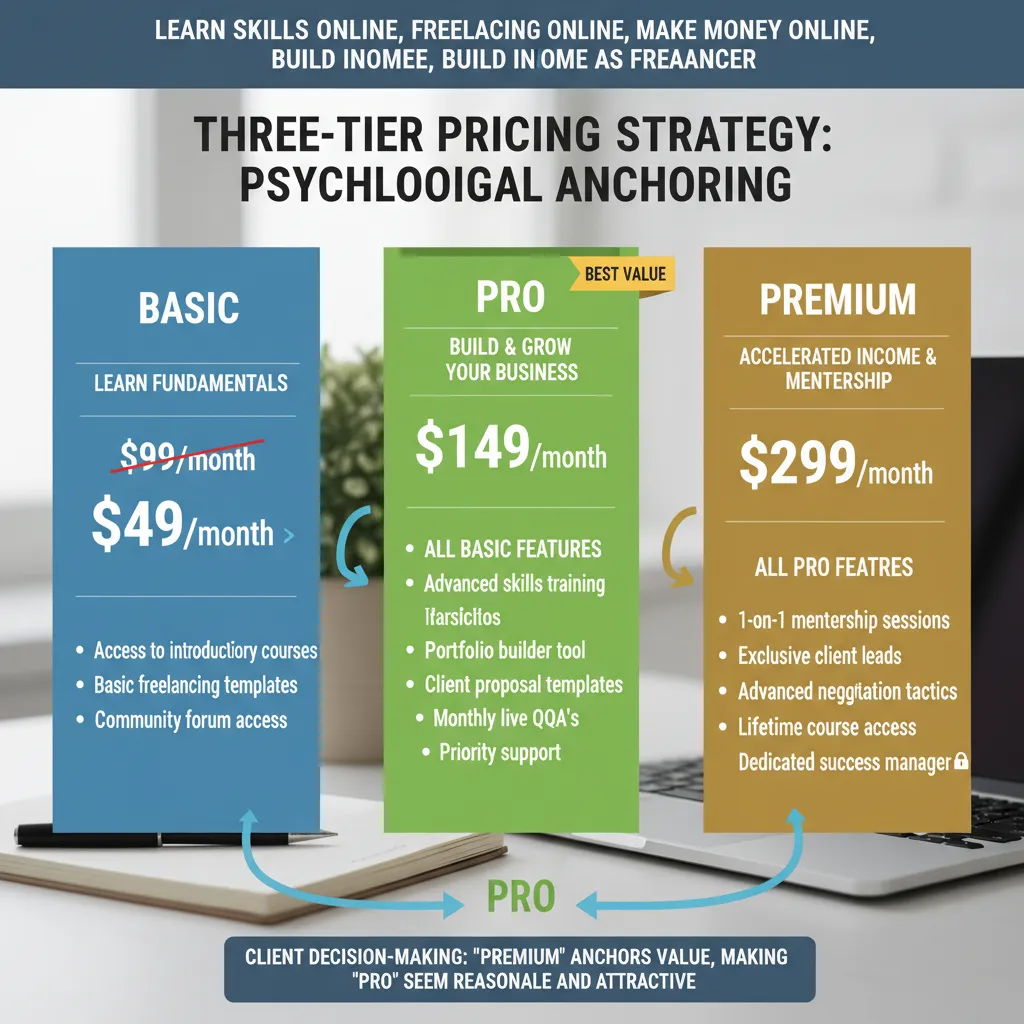
The Anchor Method: Presenting Three Tiers
When possible, offer three options in your proposal:
- Basic: Exactly what they asked for.
- Standard: What they asked for + the essential extras they forgot.
- Premium: The “Do It For You” complete package.
This psychological anchor makes the “Standard” option look like the logical choice, often increasing your deal size by 20-30%.
Automating the Search, Not the Soul
You cannot be awake 24/7, but your bidding system can be. The most successful freelancers in 2025 are using automation to find jobs, but humans to close them.
Using AI to Monitor Job Postings in Real-Time
Speed is critical. Matt, a top-ranked freelancer, emphasizes that “Speed is king. You need to bid quickly and reply quickly to keep your client’s attention” (Source: Matt, 2024). If you are bidding on a job posted 3 days ago, you are likely too late.
AI-driven freelancers can now automate up to 85% of routine bidding tasks—like filtering feeds and flagging high-match jobs—saving approximately 30 hours per week (Source: SWE-Lancer Benchmark, Dec 2024). Agencies like Binary Future used this approach to hit $100K in revenue in one month by switching from manual searching to AI-assisted lead qualification.
Performance Benchmarks: What Does Success Look Like?
It’s easy to get discouraged if you don’t know the baselines. I often have freelancers ask me, “Is a 10% win rate bad?”
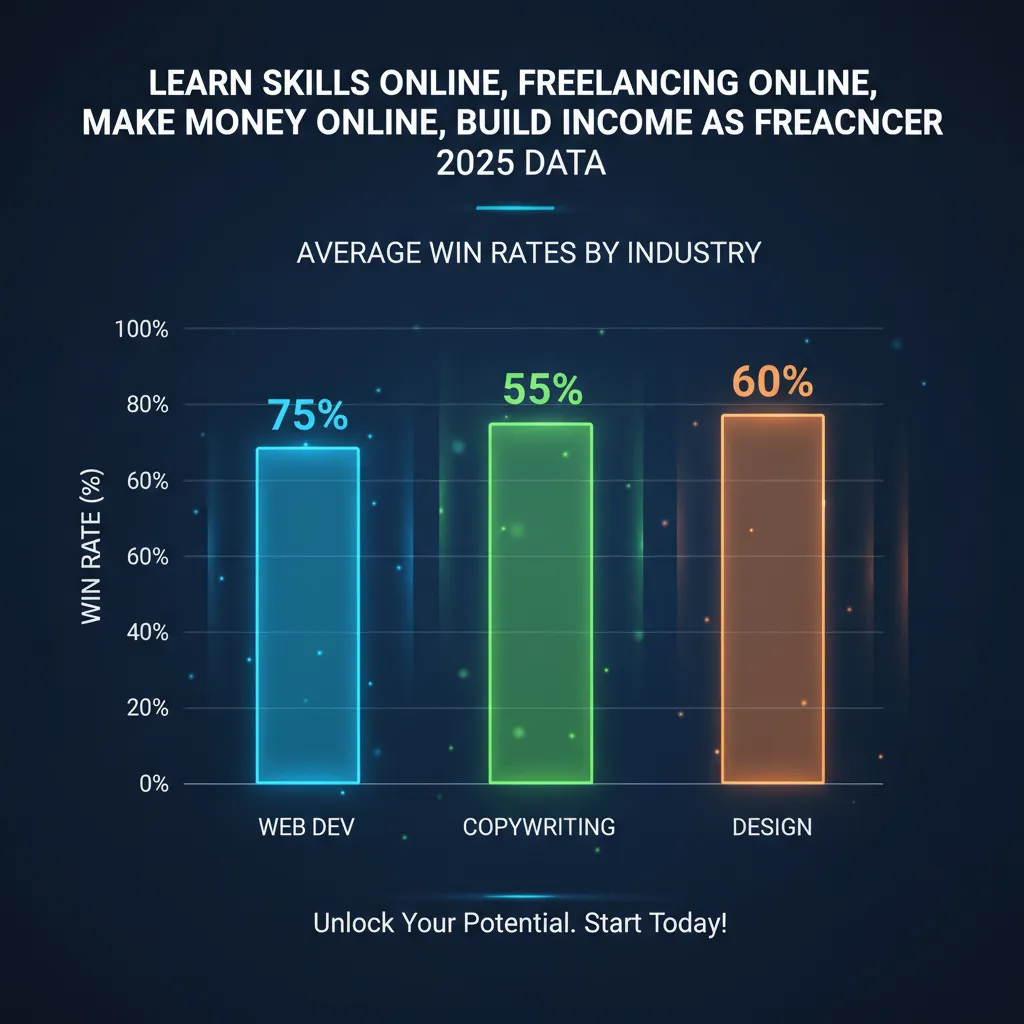
Actually, it’s quite good. According to GigRadar Analytics (Oct 2024), a healthy win rate on major platforms ranges between 6% and 20% for well-managed accounts. If you are converting 1 in 10 proposals, you are in the game.
The Trust Factor
Your bid is only half the battle; your profile is the other half. Getmany’s Dec 2024 report highlights that freelancers with professional headshots see a 30% higher response rate. In a digital world, seeing a human face builds the micro-trust needed to sign a contract.
Advanced Tactic: The “LSI” Advantage
Here is a secret SEO tactic applied to bidding. Most platforms act like search engines. If your profile and proposal don’t contain the right keywords, you are invisible. A study by Fe/male Switch (March 2025) showed that businesses using LSI (Latent Semantic Indexing) keyword strategies in their profiles saw a 30% increase in search rankings within the platform.
Action Step: If you are a writer, don’t just use “writer.” Use “SEO content,” “copywriting,” “blog management,” and “WordPress” naturally within your proposal text.
Frequently Asked Questions
It depends on the job value, but aggression pays off for high-ticket items. With Upwork’s marketplace take rate reaching 18.5% in Q2 2025 (Source: AFFiNCO Data), the platform is expensive. Don’t waste connects on low-budget jobs. Save them to “boost” your proposals on high-value contracts where you are a perfect match.
For new client relationships, fixed-price often lowers the barrier to entry because it reduces the client’s risk of “scope creep.” However, high-ticket AI projects are paying freelancers 40% more per hour than traditional gigs (Source: AFFiNCO Data), so hourly is better for specialized, ongoing consulting.
This is usually a “Portfolio Disconnect.” Your proposal hook worked, but your profile didn’t back it up. Ensure your portfolio links are active and your case studies align exactly with what you promised in the bid.
Use it for structure, not for the final draft. Clients can smell AI. Vadym Ovcharenko from GigRadar notes that “consistency matters more than luck,” but authenticity closes the deal. Use AI to summarize the client’s needs, then write the solution in your own voice.
Conclusion: Shifting from Laborer to Partner
The freelance revolution isn’t coming; it is here. With 97% of independent contractors reporting they are happier than traditional employees (Source: Jobbers.io, Sept 2025), the lifestyle is worth the fight. But the days of easy wins are over.
To dominate in 2025, you must treat bidding as a sales funnel, not a lottery. Use the 7-Part Formula. Personalize your approach. Leverage automation for speed, but keep your communication painfully human. Identify the roadblocks the client hasn’t seen yet, and you won’t just be another bidder—you’ll be the partner they can’t afford to lose.
The market is $8.39 billion strong. There is plenty of room for you, provided you stop bidding like an employee and start bidding like a business owner.
