

How to Write a Winning Freelance Proposal: The 2025 Blueprint for $10k+ Projects
It used to be simple. You’d see a job post, write a polite cover letter, attach your resume, and wait. But in 2025, that strategy is a one-way ticket to the “archived” folder. With the independent workforce exploding, the game has fundamentally changed.
According to the MBO Partners 2024 State of Independence Report, the U.S. independent workforce has reached 72.7 million people, representing a staggering 43% of the total workforce. That means for every high-value project you bid on, you aren’t just competing with a handful of locals; you’re competing with a global army of skilled professionals.
I’ve been in the freelance trenches for over a decade, and I’ve seen the shift firsthand. Clients today are tired. They are overwhelmed by AI-generated spam and generic “I can do this” messages. To cut through the noise, your proposal cannot just be a document—it must be a high-stakes sales pitch that speaks directly to ROI.
In this guide, we aren’t just talking about grammar and formatting. We are dismantling the data-backed “Outcome-Led” framework that top 1% freelancers use to maintain a 45% win rate. From psychological triggers to leveraging AI without losing your soul, here is how to write a freelance proposal that actually closes deals in 2025.
The 2025 Freelance Landscape: Why “Good” Isn’t Enough
Before we dive into the mechanics of writing, you need to understand the environment you are bidding in. The bar has been raised, and the “spray and pray” method of sending 50 proposals a day is dead.
The Rise of the AI-Enhanced Client
Clients are smarter now. They know what ChatGPT sounds like. If your proposal starts with “In the ever-evolving world of digital marketing,” they know you didn’t write it. More importantly, they assume you didn’t read their job post.
However, the opportunity is massive for those who adapt. According to MBO Partners (2024), the number of independent workers earning $100,000+ annually rose to 4.7 million this year. These high earners aren’t winning on price; they are winning on value proposition.
Market Saturation vs. Specialized Opportunity
While the market is crowded, it is crowded with mediocrity. Fiverr’s 2024 Economic Impact Report notes that U.S. independent professionals generated $319 billion in revenue in 2024. The money is there, but it flows to specialists, not generalists.
“This 6.5% growth in full-time independents signals a clear rejection of the traditional employer-employee social contract… 65% of full-time independent workers feel more secure in their careers.”
The Anatomy of an “Outcome-Led” Proposal
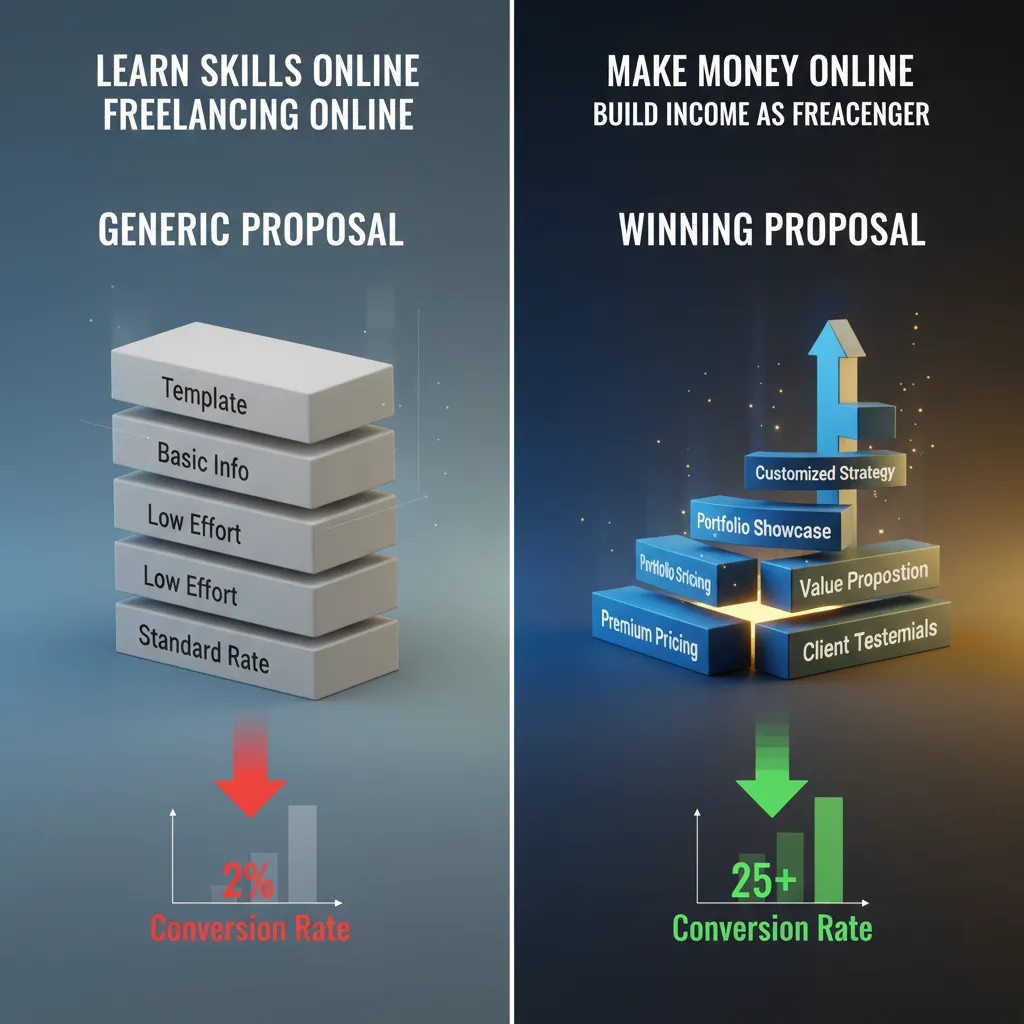
The biggest mistake I see freelancers make is writing “Task-Led” proposals. A Task-Led proposal says, “I will design a logo.” An “Outcome-Led” proposal says, “I will create a brand identity that increases your customer trust and allows you to raise prices.”
According to a 2024 case study by GigRadar, the agency Codemotion generated over $10 million in revenue on Upwork largely by shifting from manual bidding to outcome-focused, automated-assist proposals. Here is the structure that delivers those results.
1. The “Hook & Name” Opener
You have about three seconds to get their attention. On platforms like Upwork, the client only sees the first two lines of your proposal before clicking “read more.”
- Don’t: “Hi Sir/Madam, I read your job post and I am interested.”
- Do: “Hi [Client Name], I see you’re looking to scale your Shopify store to $50k/month, but your current site speed is likely hurting your conversion rate.”
According to Getmany’s 2025 analysis, proposals between 150–250 words that include at least two personalized references see the highest response rates. Finding the client’s name (often buried in previous freelancer reviews) is a small touch that proves you did your research.
2. Problem Synthesis: The “Why”
This section proves you understand their pain better than they do. Use “mirroring” techniques—repeat their specific language back to them.
If a client says they are “drowning in admin work,” don’t just offer virtual assistant services. Write: “I understand that drowning in admin work is preventing you from focusing on business development. My goal is to reclaim 10 hours of your week immediately.”
3. The Solution Bridge & Deliverables
Here, you map your skills to their ROI. Be specific about the project scope and deliverables.
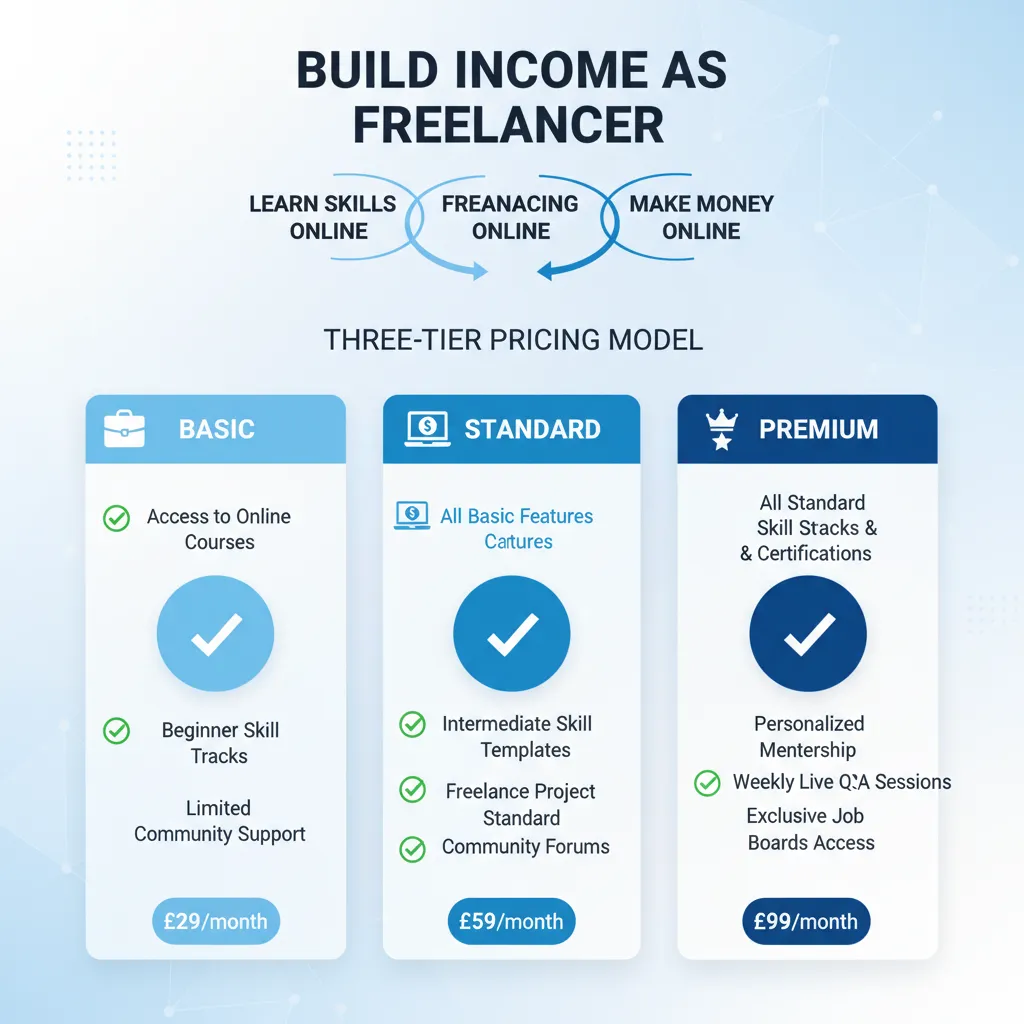
4. Transparent Pricing & The “Three-Tier” Strategy
Psychologically, giving a single price creates a “Yes/No” decision. Giving three options creates a “Which one?” decision. This is standard pricing psychology.
- Option 1 (Basic): Exactly what they asked for.
- Option 2 (Standard): What they asked for + a critical value-add (e.g., SEO optimization).
- Option 3 (Premium): The “hands-off” white-glove service.
Leveraging AI Without Losing Your Soul
I used to be skeptical of AI in proposals. Then I looked at the data. Proposally.ai (2025) reports that AI-powered proposal generation reduces creation time by 78% and can increase win rates by 31%.
But there is a catch: You cannot let AI drive. You must be the pilot.
The 70/30 Rule
My strategy for 2025 is the 70/30 rule:
- 70% AI (Research & Structure): Use tools like ChatGPT-4o or Upwork’s Uma to analyze the job post for sentiment. Ask the AI: “What is the client’s underlying fear in this job description?”
- 30% Human (Strategy & Voice): You write the hook, you select the relevant case studies, and you inject your personal opinion.
According to Fiverr’s 2024 Impact Report, 65% of full-time freelancers are now embracing generative AI. If you aren’t using it to speed up your client discovery, you are working slower than your competition.
The “Proof” Package: Beyond the Portfolio
Saying you are good is easy. Proving it is hard. In 2025, links to a generic portfolio site aren’t enough. You need social proof embedded directly in the proposal.
Quantifiable Case Studies (The STAR Method)
Don’t just paste a link. Summarize a relevant win using the STAR method (Situation, Task, Action, Result) directly in the proposal text.
Example: “For a previous client in the fintech space (Situation), I rewrote their onboarding email sequence (Action), which resulted in a 40% increase in user retention within 30 days (Result).”
The Video Pitch Revolution
This is the single biggest leverage point available right now. Most freelancers are too shy to do it.
Increase in client engagement when adding a 30-second video pitch (Source: Getmany/GigRadar 2025)
Record a 60-second Loom video walking through the client’s website or project brief. It builds instant trust. It shows you are a real person, you speak the language fluently, and you care enough to put in the effort.
Follow-Up & Closing: The Fortune is in the Second Touch
You sent the proposal. Now what? Silence is normal, but it shouldn’t be the end.
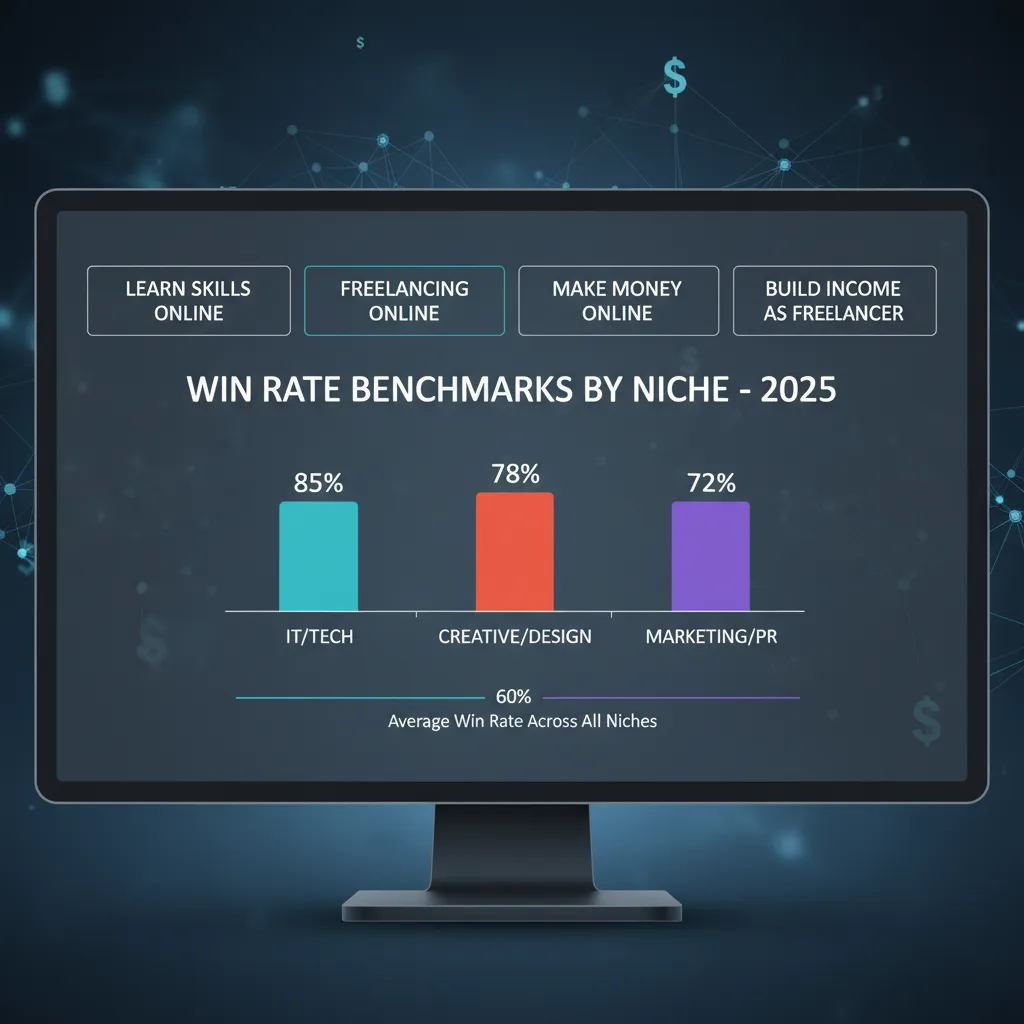
According to GigRadar’s 2025 Benchmarks, a healthy reply rate ranges from 18% to 45% depending on your niche. If you aren’t hitting those numbers, your proposal is the problem. However, if you are getting views but no replies, your Call to Action (CTA) might be weak.
The 24/72 Hour Rule
If I don’t hear back, I follow a strict cadence:
- 24 Hours: No action. Give them space.
- 72 Hours (The Value Bump): Send a polite follow-up. But don’t just say “checking in.” Add value. “Hi [Name], I was thinking about your project and realized we should also consider [Idea X] to avoid [Risk Y]. Let me know if you’d like to discuss.”
Handling Pricing Objections
As of mid-2024, 49% of freelancers expected to raise their rates. Inflation is real, and clients know it. However, you must justify the cost.
If a client says you are too expensive, do not lower your price immediately. That destroys your authority. Instead, remove scope. Say, “I understand the budget constraints. We can bring the price down to $X by removing the advanced reporting module for now. Does that work for you?”
Strategic FAQ: Writing Proposals That Win
Data from Getmany (2025) suggests the “Goldilocks” zone is between 150 and 250 words. Long enough to show value, short enough to be read on a mobile device.
Yes, but for structure and research, not for the final draft. Use AI to analyze the job post and generate an outline, then write the content yourself to maintain a human connection. Freelancers using specialized proposal tools see a 45% win rate.
Use previous client data. Instead of listing tasks (“I managed ads”), list outcomes (“I reduced Customer Acquisition Cost by 22%”). Numbers are the universal language of business value.
Based on GigRadar’s 2025 data, 18-45% is considered healthy. If you are below 10%, you need to rewrite your opening hook.
Conclusion: Your Proposal is Your First Deliverable
Writing a winning freelance proposal isn’t about luck. It’s about empathy, strategy, and proof. In 2025, the freelancers earning the lion’s share of the $319 billion independent economy are the ones who treat their proposals as their first paid project.
Remember the core principles we covered:
- Outcome-Led: Sell the result, not the task.
- Research-Backed: Use AI to understand the client deeper than they expect.
- Human-Connected: Use video and personalized hooks to stand out in a sea of robots.
The next time you sit down to write a bid, don’t just copy-paste a template. Pause. Look at the problem through the client’s eyes. Then, write the solution that only you can deliver.
