

How to Improve Your Professional Skills Online Fast: The 2025 Career Agility Guide
In 2025, the “half-life” of a professional skill has shrunk to less than five years. That means roughly half of what you know about your job today will be obsolete by 2030. I’ve seen this shift accelerate firsthand; professionals who were comfortable with basic spreadsheets three years ago are now scrambling to learn Python or AI prompting just to keep up.
You might be wondering: “I work 40+ hours a week. How can I possibly learn something new without burning out?”
Here is the reality: You don’t need a two-year master’s degree. You need speed, precision, and a tactical approach. The modern workforce is no longer about what you learned a decade ago—it’s about how quickly you can absorb the next thing.
In this guide, I will break down the exact strategies used by top-tier professionals to improve their professional skills online fast. We will move beyond generic advice and look at the “Technical Stack of Learning”—a 40-60% faster method validated by recent industry data. We’ll cover the highest-ROI skills to learn right now, the most credible fast-track certifications, and I’ve even included a calculator to help you estimate the financial return on your learning efforts.

The Skills Crisis of 2025: Why “Fast” is the New “Essential”
If you feel like the goalposts are constantly moving, you aren’t imagining it. The pace of technological disruption has created a massive chasm between the skills workers have and the skills companies need.
According to the World Economic Forum’s Future of Jobs Report (Jan 2025), 63% of employers now identify skill gaps as the single biggest barrier to business transformation. This isn’t just a minor inconvenience; it’s a structural crisis.
of the global workforce—approximately 460 million employees—will need to reskill by 2030.
Source: McKinsey & Co., May 2025
From my perspective, this data signals a fundamental shift in hiring psychology. Recruiters are caring less about the prestige of your university and more about your “Skill Velocity”—how fast you acquired your last relevant skill. A degree from 2015 is static; a certification from three months ago is dynamic proof of agility.
The danger here is complacency. If you aren’t actively upskilling, you are effectively depreciating your market value every single day.
Top 5 In-Demand Professional Skills to Learn Right Now
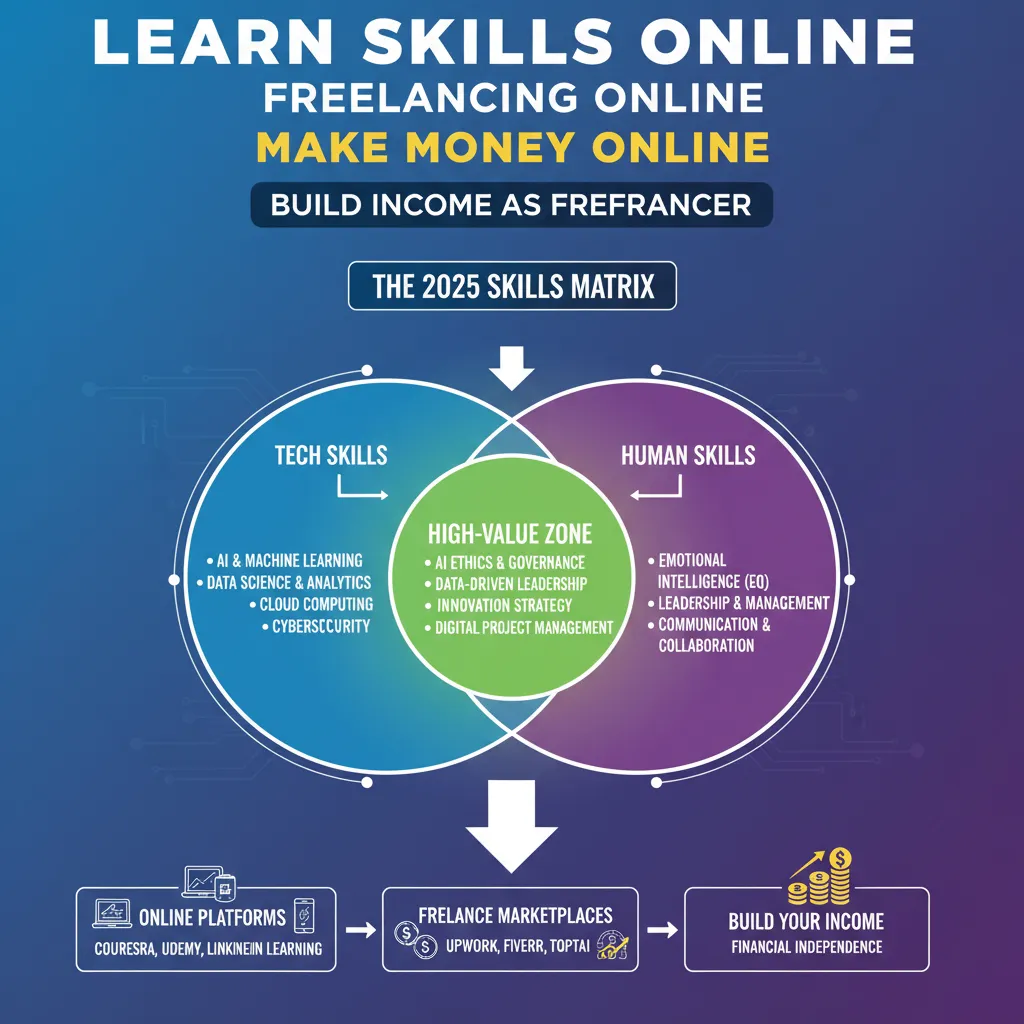
To improve your professional skills online fast, you must choose the right skills. You don’t have time to learn things that won’t move the needle on your salary or employability.
1. AI Fluency & Prompt Engineering
This is the fastest-growing category, bar none. It’s not just about knowing that ChatGPT exists; it’s about integrating it into workflows to automate drudgery. According to a June 2025 report from Coursera, GenAI enrollments surged 195% year-over-year, averaging 12 enrollments every minute. If you aren’t learning how to collaborate with AI, you are training to be replaced by someone who is.
2. Analytical Thinking & Data Storytelling
Data is useless if you can’t explain what it means. The ability to look at a spreadsheet, find the insight, and communicate it to a non-technical stakeholder is the #1 requested skill across industries. It’s the bridge between raw numbers and business strategy.
3. Human-Centric Resilience (EQ)
Here is what I find fascinating: as AI takes over technical tasks, “human” skills become more premium. Emotional intelligence, negotiation, and leadership are AI-proof. A February 2025 LinkedIn Learning report highlights that 91% of L&D professionals agree that continuous learning in these soft skills is more important than ever for career longevity.
Rapid Learning Framework: How to Upskill 40% Faster
Most people approach online learning the wrong way. They watch videos passively while checking their phone. This is the “Netflix method” of learning, and it has a near-zero retention rate. To learn fast, you need a different protocol.
According to data from Entrepreneur HQ (Oct 2025), active online learners complete coursework 40-60% faster than traditional classroom students. Here is how you can replicate that speed:
The Power of Microlearning
Stop trying to block out four hours on a Saturday. You won’t do it. Instead, focus on 15-minute “sprints.” I’ve used this method personally to learn SQL syntax during lunch breaks. The brain retains information better when it absorbs it in small, focused chunks followed by immediate rest or application.
The “Feynman Technique” for Online Retention
This is a game-changer. After you watch a 10-minute tutorial, pause the video. Open a blank document. Write down what you just learned as if you were teaching it to a sixth-grader. If you can’t explain it simply, you didn’t learn it. This forces your brain to reconstruct the information, moving it from short-term to long-term memory instantly.
Project-Based Learning vs. Passive Watching
Don’t just watch a tutorial on “How to use Excel Macros.” Open Excel and build a macro that organizes your personal budget. Context creates memory hooks. If you solve a real problem you actually have, you will never forget the solution.
Fastest Path to Credibility: Top 3-Month Certifications
You need credible signals on your resume. In 2025, industry-recognized certificates from tech giants carry weight because they focus on job-ready skills, not theory. Here is a comparison of the top fast-track options.
| Certification Provider | Focus Area | Est. Time to Complete | Ideal For |
|---|---|---|---|
| Google Career Certificates | Data Analytics, UX Design, Project Mgmt | 3-6 Months (< 10 hrs/week) | Career pivoters needing no prior experience. |
| IBM Professional Certificates | Data Science, AI Engineering | 3-5 Months | Those wanting technical credibility in enterprise tech. |
| Meta (Facebook) | Social Media Marketing, Backend Dev | 4-6 Months | Marketing professionals and aspiring developers. |
These programs are designed to be asynchronous. You can engage with them at 11 PM or 6 AM. This flexibility is key to maintaining momentum while working full-time.
ROI Analysis: The Financial Impact of Online Upskilling
Is it worth the money? And more importantly, is it worth your time? The data suggests the return is massive.
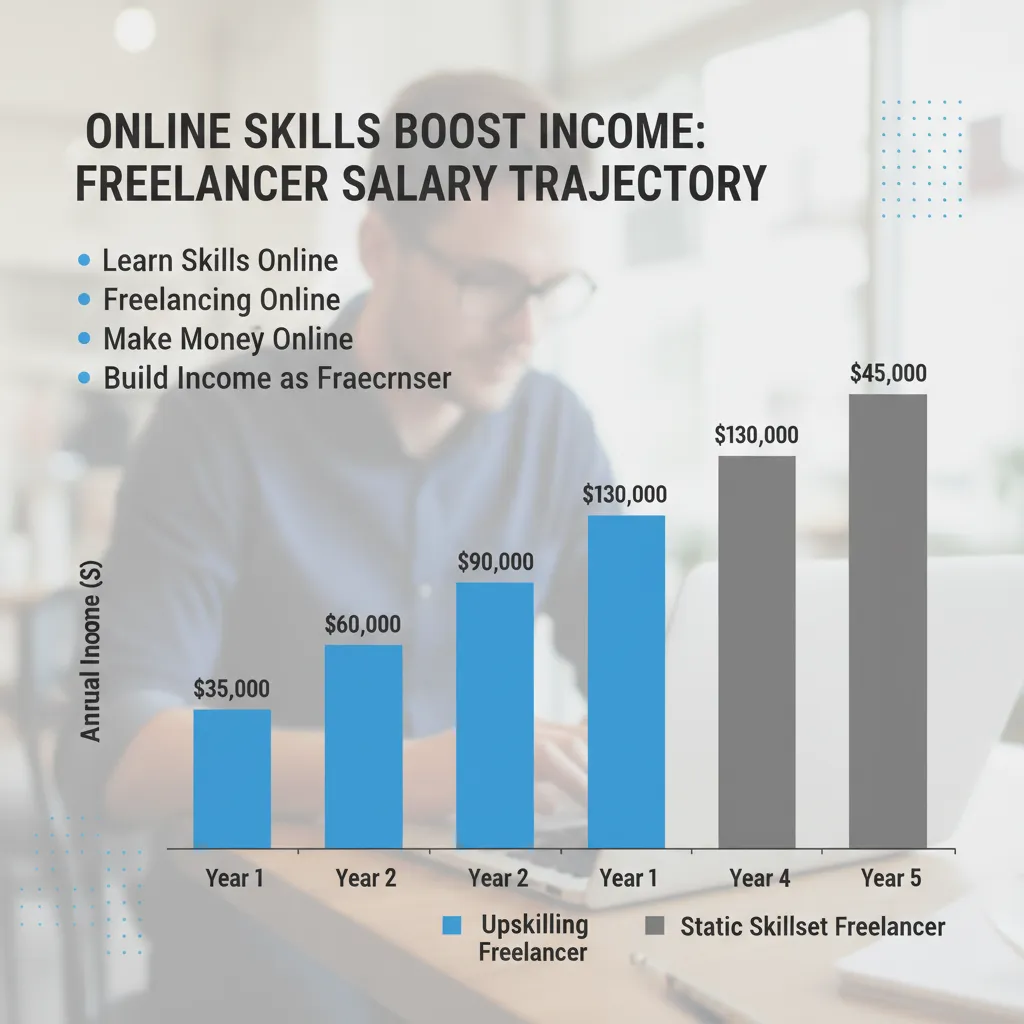
A 2024 analysis by the Brandon Hall Group found that organizations investing in effective online training can expect a staggering 353% ROI. On an individual level, acquiring a high-demand skill like Cloud Computing or AI management can lead to salary bumps of 20% or more upon job switching.
Furthermore, IBM found in a 2024 case study that their digital learning initiatives led to a 50% increase in productivity among participating employees. For you, that means getting your work done faster and having more leverage during performance reviews.
Calculate Your Potential ROI
Use this calculator to see if a paid certification is worth your investment based on potential salary increases.
Upskilling ROI Calculator
A 30-Day “Fast-Track” Roadmap
If you need to improve your professional skills online fast, you cannot rely on motivation. You need a system. Here is a 30-day roadmap I recommend to people who need to pivot quickly.
- Days 1-3: The Audit. Identify the ONE skill gap holding you back. Look at 10 job descriptions for your target role. What keyword appears in all of them? Learn that.
- Days 4-10: Immersion. Take a specialized micro-course (Udemy, Coursera Project Network). Focus on “how to do it,” not the history of the theory.
- Days 11-20: The Project. Build something. A marketing plan, a Python script, a financial model. It doesn’t have to be perfect; it has to be finished.
- Days 21-25: Documentation. Add this project to your LinkedIn. Update your resume.
- Days 26-30: Social Proof. Write a short article or LinkedIn post explaining what you built and what you learned. This validates the skill to your network.
Frequently Asked Questions
Can online certifications really replace a degree in 2025?
For many specialized roles, yes. While fields like medicine or law still require degrees, tech, marketing, and data roles are increasingly prioritizing “skill-based hiring.” A 2025 World Economic Forum analysis supports the trend that employers are looking for practical capability over academic pedigree.
What is the absolute fastest way to learn a professional skill?
The fastest method is “Just-In-Time Learning.” Don’t learn a whole software suite; learn the specific function you need to solve a current problem. This creates an immediate feedback loop. Combined with the microlearning statistics from Entrepreneur HQ, this approach creates the highest retention in the shortest time.
How do I list these skills on my resume?
Don’t just list “Python” or “Data Analysis” in a skills section. Create a “Projects” section. List the certification, but immediately follow it with: “Applied [Skill] to build [Project Name] which solved [Problem].” Evidence beats claims every time.
Conclusion
The ability to improve your professional skills online fast is the ultimate safety net in an unpredictable economy. We’ve looked at the data: with 63% of employers facing skill gaps and the incredible ROI of online training, the market is screaming for agile learners.
You don’t need to be a genius to stay ahead in 2025. You just need to be consistent. Start with one micro-credential. Dedicate 20 minutes a day. Use the resources provided here—like the comparison table and the ROI calculator—to make informed decisions.
The half-life of skills will continue to shrink. The only variable you can control is your speed of adaptation. So, what will you learn tomorrow?
