


How to Monetize Social Media in 2025: 12 Proven Strategies to Scale Your Income
Look, the days of posting a random photo of your latte and expecting a check in the mail are long gone. The creator economy has matured into a sophisticated, high-stakes industry. In fact, according to a November 2024 report by Grand View Research, the global creator economy was valued at $205.25 billion in 2024 and is projected to surge to $252.33 billion by the end of 2025.
But here is the harsh reality I see every day working with creators: the gap between “posting content” and “running a business” is widening. While the market is exploding, Marketing LTB’s 2024 Creator Report reveals that 50% of creators still earn less than $15,000 per year, while the top 4% are pulling in over $100,000 annually.
What separates the broke creators from the profitable entrepreneurs? Strategy.
In this guide, I’m going to walk you through the exact blueprint for monetizing your social media presence in 2025. We aren’t just talking about vanity metrics; we are covering the transition from ad revenue to owning your audience, navigating the new legal landscape, and leveraging the “Silent Social” trends that are currently dominating the industry.

The State of the Creator Economy in 2025
To make money, you need to understand where the money is flowing. The narrative has shifted. In 2025, brands aren’t just looking for massive follower counts; they are looking for community and conversion.
The “Silent Social” Trend: We are seeing a massive migration away from public feeds into private communities (Discord, Slack, Newsletters). This is where the highest conversion rates are happening right now.
It’s not just about market size; it’s about market share. As noted by Eric Sheridan in the 2025 Goldman Sachs ‘Creator Economy: Framing Market Opportunity’ report, “We expect continued growth… with creators taking share of total spend & outpacing overall industry growth.”
This means traditional advertising budgets are being siphoned off TV and billboards and deposited directly into the bank accounts of creators who know how to negotiate.
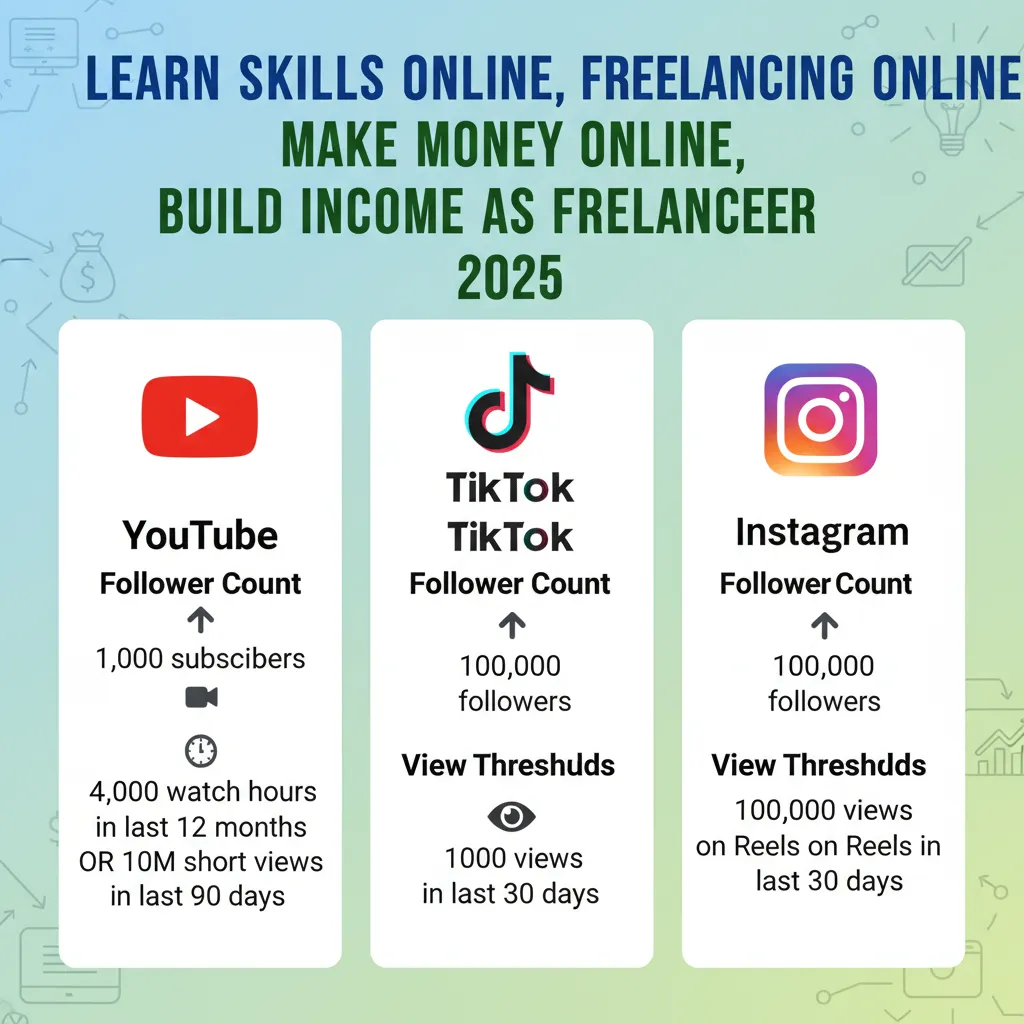
Platform-Specific Monetization Requirements (2025 Updates)
Before you can cash in, you need to know the rules of engagement. Each platform has pivoted its monetization strategy significantly this year. Let’s break down the major players.
1. YouTube: The Partner Program (YPP) vs. Shorts
YouTube remains the gold standard for long-term passive income. However, the requirements have bifurcated. You can now qualify through long-form watch hours or Shorts views. While Shorts ad revenue is improving, the real money on YouTube in 2025 is coming from “Fan Funding”—features like Super Chat and Channel Memberships.
2. TikTok: The Creativity Program Beta
If you’re still thinking about the old “Creator Fund,” you’re behind. TikTok has aggressively pushed the Creativity Program, which rewards videos longer than one minute. Why? Because they are trying to compete with YouTube for ad dollars.
However, be aware of market volatility. Due to ongoing fears regarding potential bans or regulation, marketing spend on the platform has seen fluctuations. Interestingly, recent data suggests brands are still investing heavily, but they are diversifying.
3. Instagram: Subscriptions and Gifts
Instagram is no longer just a photo app; it’s a storefront. The introduction of Instagram Subscriptions allows you to gate exclusive content behind a monthly fee, directly competing with Patreon.
High-Margin Monetization: Beyond Ad Revenue
Relying solely on platform payouts is a rookie mistake. Ad revenue is volatile and subject to algorithm changes. To build a resilient business, you must control the product.
Selling Digital Products
This is where I see the highest profit margins. Whether it’s an ebook, a preset pack, or a Notion template, digital products require zero inventory. In my experience, creators with as few as 1,000 engaged followers can generate full-time income by solving a specific problem for their audience.
Social Commerce: The $141 Billion Opportunity
The days of “link in bio” are evolving into integrated shopping experiences. According to Forbes / Keek Research 2025, social commerce sales are projected to reach $141 billion in the U.S. by 2028, nearly doubling from 2023 levels.
Take TikTok Shop for example. It has transformed the app into an e-commerce giant. You can now tag products directly in your video, allowing users to buy without leaving the app. This friction-free purchasing is why conversion rates on social commerce are skyrocketing.
Duolingo didn’t just post ads; they transformed their mascot into a Gen Z influencer. According to a SocialRails 2025 Case Study Analysis, this character-driven strategy resulted in 8.6 million followers and a massive 60% year-over-year increase in app downloads. The lesson? Entertainment drives revenue.
Brand Partnerships: The Heavy Hitter
Despite the rise of digital products, brand deals remain the bread and butter for most creators. In fact, a report from Market.us on the Creator Economy 2025 states that brand deals remain the primary revenue source for 68.8% of creators, significantly outpacing ad revenue, which sits at just 7.3%.
Why Brands Are Spending More
It comes down to Return on Investment (ROI). Traditional ads are losing effectiveness, while creator endorsements feel like a recommendation from a friend. According to the Influencer Marketing Hub 2025 Benchmark Report, influencer marketing delivers an average ROI of $5.78 for every $1 spent.
— Oksana Danshyna, Director of PR at Cloudways (Source: Socialinsider 2025 Trends Report)
How to Land Deals (Even with a Small Following)
You don’t need a million followers. You need a Media Kit and a pitch. Micro-influencers (10k-50k followers) often have higher engagement rates than celebrities, making them more valuable to niche brands. Focus on your engagement rate and audience demographics rather than your follower count.
The Rise of the “UGC” Entrepreneur
Here is a term you need to know for 2025: User Generated Content (UGC) Creators. This is different from being an influencer.
As a UGC creator, you are not paid to post content on your channel. You are paid to create content for a brand’s channel. This means you don’t need followers. You just need to be good at making videos.
Brands are desperate for content that looks organic but is actually a paid asset. This is creating a “hidden economy” where creators are making $200-$500 per video without ever showing their face to their own audience.

Scaling Your Business: Legal, Tax, and AI
This is the section most “gurus” skip, but it is the most important part of this article. If you are making money, you are a business. And businesses have liabilities.
The Legal Side of Monetization
Once you start accepting payments, you need to separate your personal finances from your business finances. I strongly recommend setting up an LLC (Limited Liability Company) or the equivalent in your country. This protects your personal assets if you ever get sued over copyright or a contract dispute.
Taxes for Creators
In the U.S. and many other jurisdictions, social media income is taxable. If you receive a brand deal payment, you will likely receive a 1099 form. However, as a business owner, you can also deduct expenses. Cameras, lighting, software subscriptions, and even a portion of your home internet can often be written off. (Disclaimer: I am a writer, not an accountant. Always consult a tax professional.)
Leveraging AI Without Losing Your Soul
Artificial Intelligence is the lever that allows you to scale. You can use tools to repurpose one video into three blog posts, ten tweets, and five Pinterest pins. However, use AI for structure, not substance. As Oksana Danshyna mentioned earlier, the “human touch” is your competitive advantage. If your content feels robotic, your audience will tune out.
Conclusion: From Poster to Professional
Monetizing social media in 2025 is not about getting lucky with a viral video. It is about building a diversified ecosystem of income streams. It’s about moving your audience from “rented land” (social platforms) to “owned land” (email lists and communities).
To recap, here is your checklist for the year:
- Audit your platforms: Are you optimizing for the new 2025 monetization features?
- Build a product: Stop relying 100% on brand deals. Launch a digital product.
- Pitch effectively: Use the data showing the $5.78 ROI to justify your rates.
- Get legal: Protect your income with proper business structures.
The opportunity is massive—$252 billion massive. But the creators who win this year will be the ones who treat their content like a media company, not a hobby.
