


Master the Art of Reputation: 17 Proven Tips to Get Five-Star Client Reviews in 2025
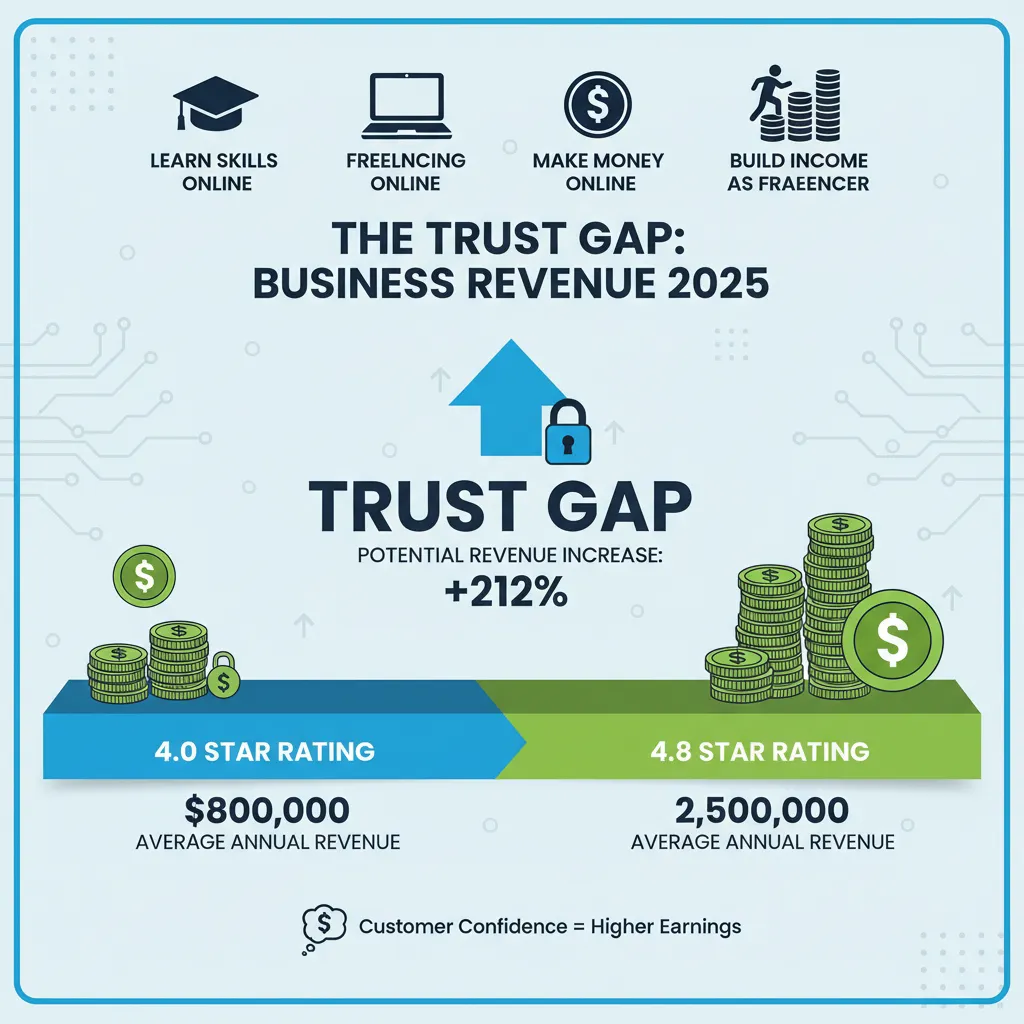
In 2025, a 4.2-star rating is no longer just “okay”—it is a silent revenue killer. With the digital marketplace becoming increasingly crowded, the difference between a thriving business and a stagnant one often comes down to the decimals on your Google Business Profile.
But here is the thing: securing authentic feedback has shifted from a simple marketing task to a complex legal and psychological strategy. According to BrightLocal’s February 2024 survey, 75% of consumers “always” or “regularly” read online reviews when searching for local businesses. If you aren’t actively managing this conversation, you are effectively invisible to three-quarters of your potential market.
I’ve spent years analyzing reputation management strategies, and I’ve noticed a disturbing trend: businesses are either too afraid to ask for reviews, or they are doing it so aggressively that they risk penalties. The landscape has changed drastically with recent federal regulations.
This guide isn’t just a list of tips; it is a defensive and offensive playbook based on data from 1.2 million reviews and the latest legal statutes. We will cover how to navigate the FTC’s new crackdown, how to leverage the “Golden Window” for requests, and the psychological triggers that turn happy clients into vocal advocates.
The New Rules of Reputation: Why 2025 is Different
Before we dive into the “how-to,” we need to address the elephant in the room: the law. The days of buying reviews, gating reviews (only asking happy customers), or using employee accounts to boost ratings are over. And I don’t mean they are frowned upon; I mean they are legally dangerous.
The FTC’s Landmark 2024 Ruling
On August 14, 2024, the Federal Trade Commission (FTC) announced a Final Rule banning fake reviews and testimonials. This isn’t a slap on the wrist anymore. The rule allows the agency to seek civil penalties of up to $51,744 per violation.
Lina Khan, the FTC Chair, stated in the official press release: “By firms using fake reviews to manipulate rankings… they are not just cheating consumers, but also honest businesses. Our new rule ensures the playing field is leveled.”
From my perspective, this is actually good news for honest operators. It removes the cheaters from the map, meaning your genuine hard work is more likely to shine. But it means your process for getting five-star reviews must be squeaky clean.
Pre-Request Strategy: Setting the Stage for Five Stars
You can’t harvest a crop you didn’t plant. The review request actually begins the moment the client signs the contract or walks through the door. In my experience, the biggest mistake business owners make is thinking the service and the review are separate events. They are the same continuum.
The “Under-Promise, Over-Deliver” Mechanism
A 5-star review is rarely about the service itself; it’s about the gap between expectation and reality. If a client expects a delivery in 5 days and gets it in 5, that’s a 3 or 4-star experience (you met expectations). If they get it in 3 days, that’s a 5-star “wow” moment.
To engineer this, you need to deliberately set expectations slightly lower than your internal targets. If you know you can finish a project by Friday, promise it for the following Tuesday. When you deliver early, you trigger the psychological principle of positive surprise, which is the fuel for high-quality feedback.
Identifying “Review Champions”
Not all clients are candidates for a review request. You need to identify your “Review Champions” while the work is happening. These are clients who:
- Verbalize their satisfaction (“This is amazing!”).
- Refer others to you during the process.
- Engage frequently and positively with your team.
When you spot a champion, tag them in your CRM immediately. These are the people who will write the paragraph-long reviews that influence SEO, not just leave a star rating without text.
The “Golden Window”: Timing Your Ask for Maximum Impact
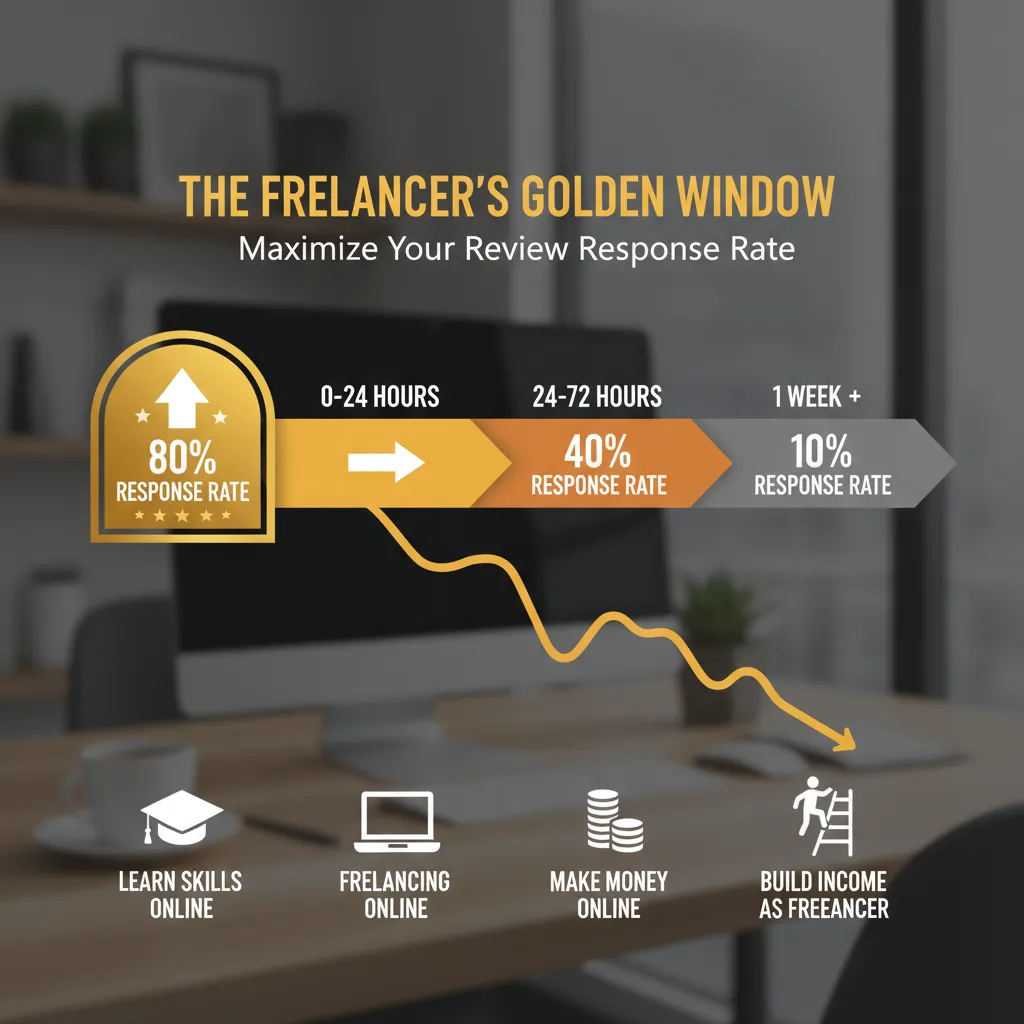
Timing isn’t everything—it’s the only thing. If you wait a week to ask for a review, the emotional high of the service has faded. You become just another email in their inbox asking for a favor.
The 24-Hour Rule
Data from the Womply Research (Updated 2024) indicates that businesses engaging with customers immediately post-transaction see significantly higher conversion rates on feedback requests. You have a “Golden Window” of approximately 24 hours after the service is rendered or the product is delivered.
Why? Because the dopamine hit of the solution is still fresh. The problem you solved is still a memory of relief. In the home service industry, for example, the best time to ask is literally while standing in the driveway after the repair is done.
B2B vs. B2C Timing Nuances
While B2C relies on speed, B2B requires a slightly different approach. In professional services (legal, consulting, agency work), the “result” might not be felt immediately.
- B2C (Retail, HVAC, Dining): Ask immediately via SMS or QR code.
- B2B (SaaS, Consulting): Ask after a “milestone win.” Don’t wait for the end of the year contract. Ask when you’ve just saved them money or launched a successful campaign.
The Ask: Templates and Psychological Triggers
Now, let’s look at the mechanics of the request. How do you ask without sounding desperate? The key is using the “Reciprocity” angle. As Jay Baer, author of Talk Triggers, noted in his 2024 keynotes, “The difference between a satisfied customer and a loyal one is that the loyal one actually tells someone about you.”
The SMS Strategy (High Conversion)
According to a 2024 industry report from Podium, text message open rates hover around 98%, compared to 20% for email. A case study from the same report highlighted a mid-sized HVAC company that implemented automated SMS review requests immediately after service completion. The result? A staggering 340% increase in monthly 5-star reviews over 90 days.
“Hi [Name], thanks for choosing [Company]! It was a pleasure fixing your [Problem] today. If you have 30 seconds, could you share your experience here? [Link] It helps local families find us. Thanks, [Technician Name]”
Notice the psychology here: “It helps local families find us.” You aren’t asking for yourself; you are asking them to help their community. That is a powerful altruistic trigger.
The High-Stakes Email (Professional Services)
For industries like real estate or law, a text might feel too casual. Here, you want to frame the review as the final step of success.
Subject: One final favor, [Name]?
“Hi [Name],
Congratulations again on closing! It was an honor to help you navigate this process.
I have a small favor to ask. Many clients like you come to me based on the experiences of others. Would you be willing to write a brief sentence about how we handled [Specific Obstacle]?
You can click here: [Link]
No pressure at all, but it would mean the world to me.
Best,
[Your Name]”

Managing Your Online Presence Across Platforms
A common question I get is: “Where should I send them?” Should you focus on Google, Yelp, Facebook, or industry niche sites?
The Google Dominance
For 90% of businesses, Google Business Profile (GBP) is the king. According to the Whitespark 2024 Local Search Ranking Factors, review signals (velocity, quantity, and diversity) account for approximately 17% of how Google ranks local businesses in the Map Pack. If you want to show up when people search “near me,” you need Google reviews.
The Niche Strategy
However, putting all your eggs in one basket is risky. I recommend a “Review Diversity” strategy:
- Real Estate: Zillow and Realtor.com are non-negotiable. An agency using the “Closing Gift QR Code” method (attaching a card to a closing gift) saw a 50% increase in Zillow review volume according to NAR Tech Edge Insights 2024.
- Healthcare: Healthgrades and Vitals are critical for patient trust, even if they don’t drive SEO as hard as Google.
- Hospitality: TripAdvisor remains a titan for tourism-based traffic.
Closing the Loop: Responding to Build Authority
You got the review. Great! Your job isn’t done. Responding to reviews is perhaps the most underutilized SEO and conversion tactic available.
A 2024 survey by BrightLocal found that 88% of consumers are likely to use a business if they see the owner responds to all reviews, both positive and negative. Silence sends a message of indifference.
How to Respond to a 5-Star Review
Don’t just say “Thanks!” That’s a wasted opportunity. Use keywords in your response to further boost your SEO relevance.
SEO-Optimized Response: “Hi John, thank you! We are so glad we could help with your emergency plumbing repair in [City Name]. It was great getting that water heater replaced so quickly for you. Thanks for choosing [Company Name]!”
See what I did there? I reinforced the service provided and the location, which helps Google understand exactly what your business does and where you do it.
The “Imperfect 5” Strategy: Why 4.8 Beats 5.0
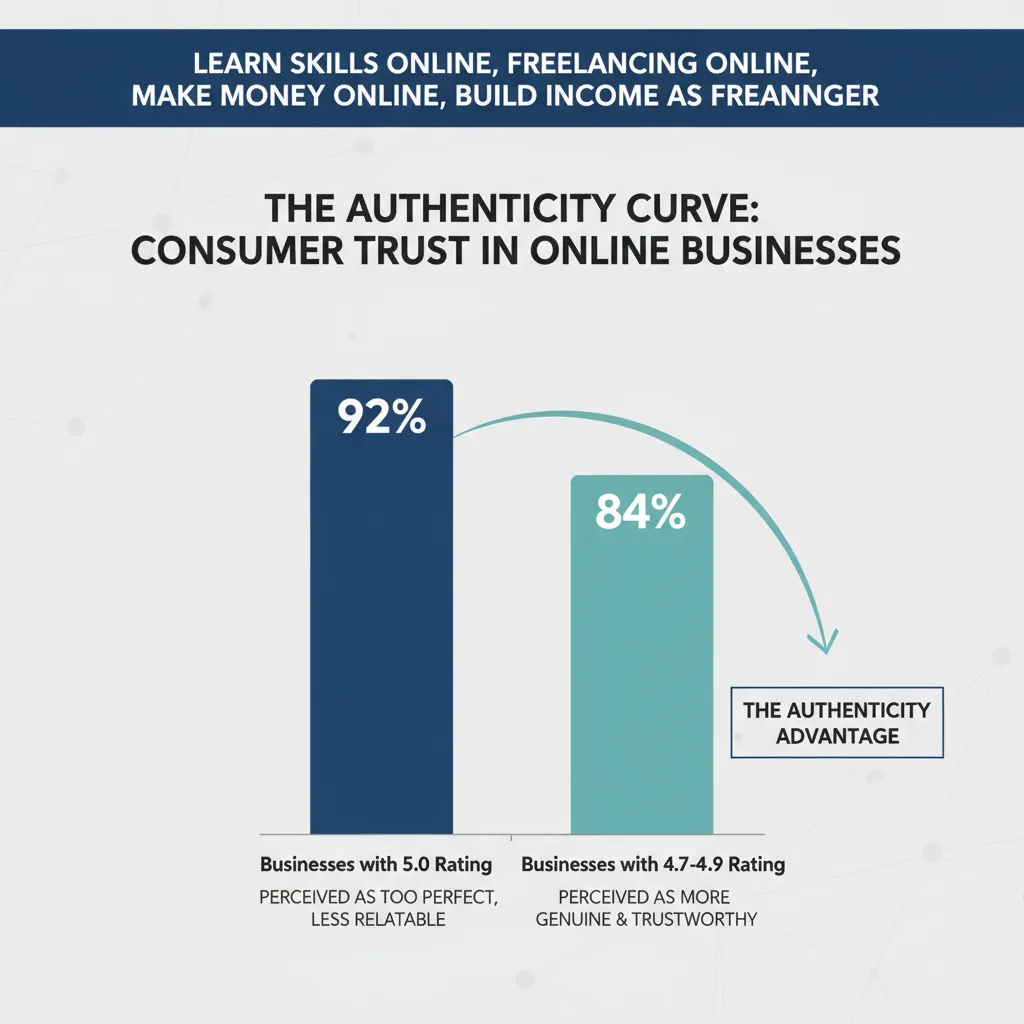
This might sound counterintuitive, but you shouldn’t panic if you get a 4-star review. In fact, a perfect 5.0 rating across hundreds of reviews can actually look suspicious to savvy consumers.
According to Womply Research, businesses with a 4.0 to 4.5-star rating earn 28% more annual revenue than those with lower ratings, but interestingly, conversion rates often peak between 4.5 and 4.9. Consumers understand that no business is perfect. A stray 4-star review creates an “authenticity gap” that makes the 5-star reviews around it look more legitimate.
Troubleshooting: Handling the Negative
Even the best businesses get bad reviews. How you handle them defines your reputation more than your praise does.
- Cool Down: Never reply immediately when you are angry.
- Acknowledge and Pivot: “I am sorry to hear about your experience. This is not our standard.”
- Take it Offline: “Please contact me directly at [Phone Number] so I can make this right.”
Do not get into a debate in the comments section. You are not writing the response for the person who left the bad review; you are writing it for the thousands of potential customers who will read it later.
Frequently Asked Questions
Is it illegal to pay for 5-star reviews?
Yes, absolutely. Under the FTC’s 2024 Final Rule, buying reviews or offering undisclosed incentives for positive reviews can result in fines over $50,000 per violation. You can incentivize feedback (e.g., “Review us for a chance to win”), but you cannot incentivize the sentiment (e.g., “Give us 5 stars for $10 off”).
How do I get my first 10 Google reviews?
Start with your inner circle. Reach out to past clients from the last 6 months who you know were satisfied. Send a personalized email explaining that you are trying to grow your online presence. Most happy clients are willing to help a small business grow.
Does replying to reviews help SEO?
Yes. While Google hasn’t released an exact algorithm, evidence from Whitespark suggests that keywords in owner responses contribute to relevance for local search queries.
What is the best way to ask for reviews without being pushy?
Make it about them helping others, not them helping you. Use the line: “Your feedback helps your neighbors find trustworthy service.” It shifts the dynamic from a favor to a community contribution.
Conclusion
Getting five-star client reviews in 2025 isn’t about luck; it’s about systems. It’s about respecting the legal boundaries set by the FTC, understanding the psychology of the “Golden Window,” and automating the ask so that no happy customer slips through the cracks.
Your reputation is your most valuable asset. It takes years to build and moments to destroy. By implementing these strategies—focusing on ethical requests, timely follow-ups, and professional responses—you aren’t just chasing stars. You are building a digital moat around your business that competitors cannot easily cross.
Don’t wait for the praise to come to you. Go out and ask for it, but do it the right way.
