

How to Raise Your Freelance Hourly Rates in 2025: The Data-Backed Guide
I remember the first time I tried to raise my rates. I sat in front of my laptop for twenty minutes, my cursor hovering over the “Send” button, terrified that my client would laugh in my face—or worse, fire me on the spot.
If you’re reading this, you probably feel that same knot in your stomach. But here is the reality check you need: staying stagnant is costing you more than you think.
The market has shifted aggressively. According to the Fiverr Freelance Economic Impact Report released in May 2024, 49% of U.S. independent workers planned to raise their rates to combat rising business costs. If you aren’t part of that statistic, you are effectively taking a pay cut every single day you work.
In this guide, we aren’t just going to talk about “knowing your worth.” We are going to look at the hard data from 2024–2025, use proven formulas to calculate your new fee, and I’ll give you the exact email templates to handle the conversation without burning bridges.

The “Tipping Point”: When is the Right Time to Raise Rates?
Most freelancers wait until they are desperate to raise prices. That is a mistake. You should be raising rates when you are comfortable, not when you are starving.
Through my years of consulting with independent contractors, I’ve found there are three specific “tipping points” where a rate hike is not just justified, but expected.
1. The Supply & Demand Leverage (The 80% Rule)
If your calendar is 80% full, you are undercharging. It’s basic economics. When demand exceeds supply, prices must rise to filter the market.
By raising your rates, you might lose the bottom 20% of your clients (the ones who likely cause the most stress), but you make space for premium clients who value quality over cost. MBO Partners’ 2024 State of Independence report found that the number of independents making over $100,000 annually grew to 4.7 million in 2024. How did they get there? They didn’t work more hours; they increased their value per hour.
2. You’ve Upskilled (The AI Advantage)
This is the most critical shift for 2025. If you are using AI tools to work faster, charging by the hour is actually penalizing you.
8.1 Hours
The average time saved per week by freelancers using AI tools in 2023.
If AI helps you complete a 5-hour task in 2 hours, and you still charge your old hourly rate, you just lost 60% of your revenue for the same output. You must raise your rates to capture the value of the outcome, not the time spent.
3. The 12-Month Rule
Employees get annual reviews and cost-of-living adjustments. Why shouldn’t you? Barb Adamski, a veteran editor, gave advice that stuck with me: “My advice to anyone starting out freelancing? Double your rates at least once in your career.” While doubling might seem extreme overnight, a standard annual increase of 5-10% is standard business practice.
Sector-Specific Benchmarks: What is the Market Charging in 2025?
Before you set your number, you need to know the baseline. You can’t charge premium rates for a commodity service, but you also shouldn’t charge commodity rates for premium skills.
According to ZipRecruiter and Quantumrun data for 2024/2025, the average freelance wage in the U.S. has hit $47.71 per hour. However, this varies wildly by specialization.
| Industry | Junior Rate | Senior/Expert Rate | Trend |
|---|---|---|---|
| Tech & Development | $40 – $60/hr | $120 – $250+/hr | High Demand (AI/Cybersecurity) |
| Digital Marketing | $35 – $50/hr | $100 – $175/hr | Shift to Strategist Roles |
| Creative & Writing | $25 – $45/hr | $85 – $150/hr | Niche Specialization Required |
| Virtual Assistance | $20 – $30/hr | $45 – $60/hr | Tech-Savvy VAs in demand |
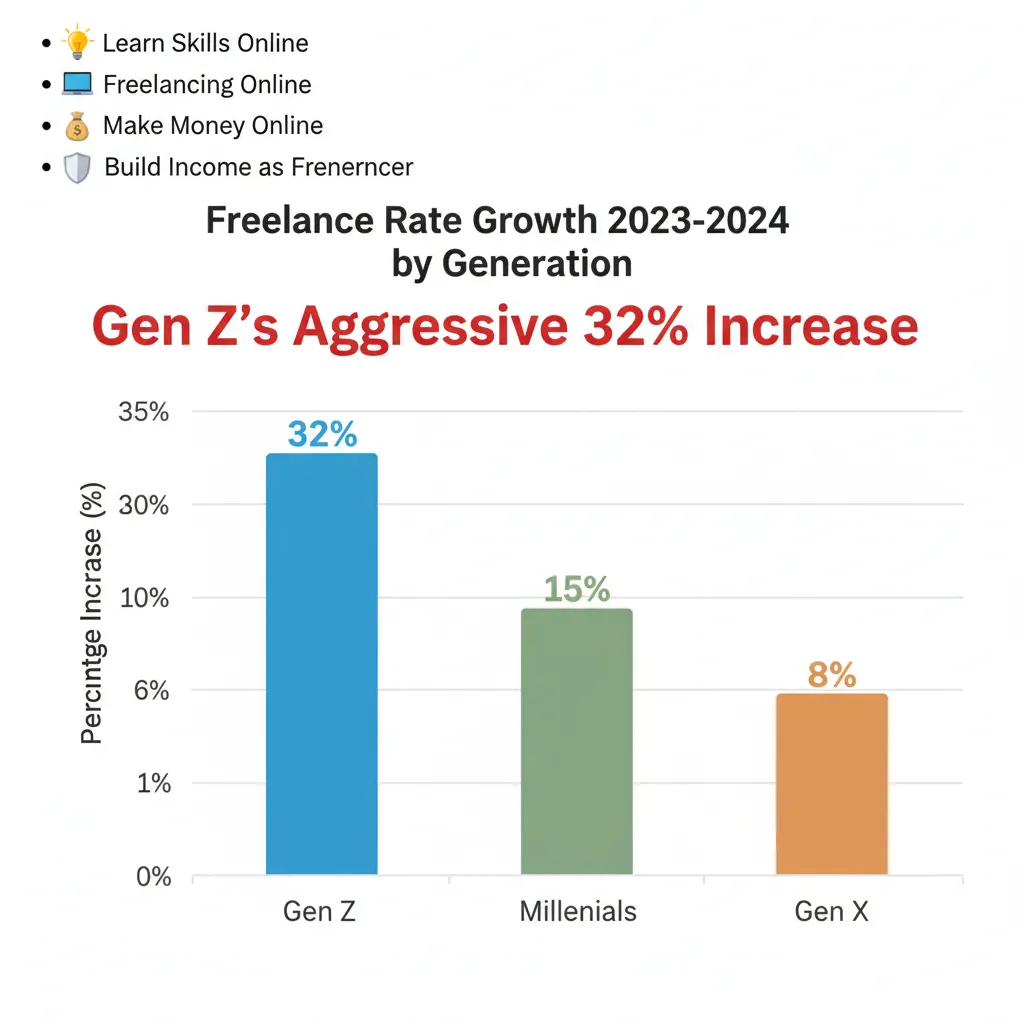
Interestingly, Gen Z is leading the charge on this. The Fiverr 2024 Impact Report noted that 65% of Gen Z independent workers raised their rates in 2023, averaging a massive 32% increase. They aren’t waiting for permission.
Interactive Tool: The “Real Rate” Calculator
Many freelancers forget to account for the “unbillable” hours—marketing, accounting, and sick days. Use this calculator to determine what your hourly rate actually needs to be to hit your income goals.
Freelance Rate Calculator
3 Proven Pricing Models to Break the “Hourly Trap”
If the calculator gave you a number that scares you (like $150/hr), you might need to abandon hourly billing altogether. The most successful freelancers I know have moved away from selling time.
1. Value-Based Pricing
Stop charging for the drill; charge for the hole in the wall. If you write a sales page that generates $50,000 for a client, does it matter if it took you 3 hours? A “Case Study” by MakeALivingWriting highlighted a writer who moved from $100/post to $300/post simply by pitching new prospects. The result? An immediate “Yes.” The client was paying for the expertise, not the minutes on the clock.
2. Retainer Models (MRR)
This is the holy grail. Offer a set scope of deliverables for a fixed monthly fee. This stabilizes your cash flow and often allows you to work faster (increasing your effective hourly rate) without the client watching the clock.
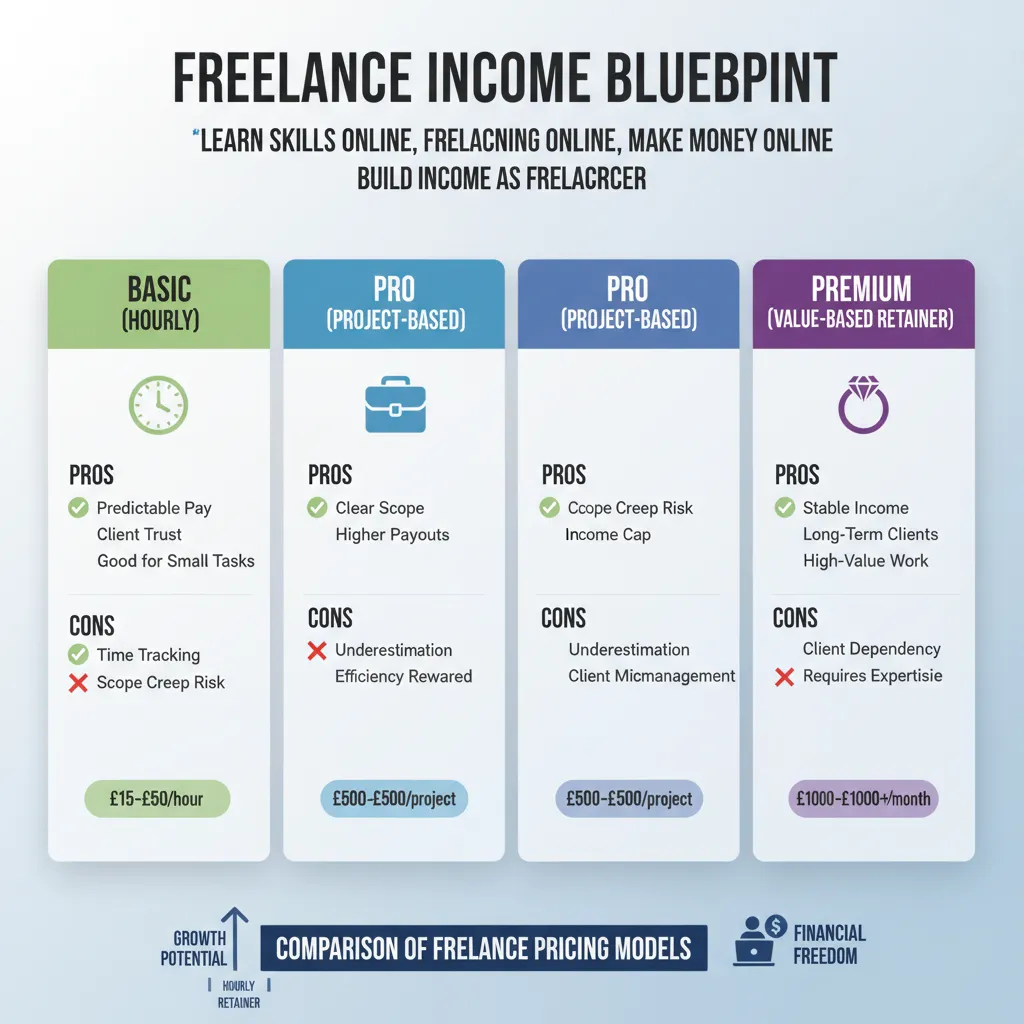
3. Tiered Packages
Humans love options. Presenting three pricing tiers (Basic, Pro, Premium) anchors the client to the middle option. It changes the question from “Should I hire you?” to “Which package should I choose?”
How to Tell Your Clients: The Psychology of a Price Increase
This is the hardest part. How do you send the email without sweating bullets? The key is framing. You aren’t asking for a favor; you are informing them of a business change.
Jaime L. Brockway, a writing coach, notes that “Clients challenging your rates is good. You should aim to reach their budget limits and get pushback.” If everyone says yes immediately, you are too cheap.
The “Investment” vs. “Expense” Frame
Don’t justify your rate increase by complaining about your rent or inflation. Clients don’t care about your costs; they care about their value. Frame the increase around the enhanced value you bring (new skills, faster turnaround, higher quality).
The Freelance Rate Increase Email Template (2025 Edition)
Here is a template you can swipe and adapt. Notice it gives a 30-day notice—this is professional courtesy.
Hi [Client Name],
I’ve really enjoyed working with you on [Project Name] over the past year. We’ve achieved some great results, specifically [mention 1 specific win].
To continue delivering the highest level of service and to account for the upgraded tools/software I’m using to streamline our workflow, I’m adjusting my rates effective [Date – 30 days out].
My new rate will be [New Rate].
Since I value our long-term partnership, I’d like to keep you at my current rate for an additional month beyond that date, until [Date].
I’m excited about what we can achieve in Q3. Please let me know if you have any questions!
Best,
[Your Name]
Handling Pushback: What If They Say No?
It happens. But remember, a negotiation is a conversation, not a conflict.
If a client balks at the new price, Kelly Monahan from the Upwork Research Institute suggests that skilled talent prioritizes “financial control.” This means you have options:
- Reduce Scope: “I understand the budget is tight. We can stick to the old monthly budget, but I will need to reduce the deliverables to X.”
- Pre-Pay Discount: “If you can pay for the quarter upfront, I can lock in the old rate for this billing cycle.”
- The Walk Away: Sometimes, you have to fire a client to make room for a better one.
Conclusion
Raising your freelance hourly rates is uncomfortable. It feels risky. But the data from Fiverr, MBO Partners, and ZipRecruiter all points to one conclusion: the freelance economy is bifurcating. There are those who treat it as a race to the bottom, and there are those who treat it as a premium business.
In 2025, your value is tied to the problem you solve, not the clock you punch. Use the calculator above, draft that email, and click send. You’ve earned it.
Frequently Asked Questions
How much should I raise my freelance rates each year?
A standard baseline is 5-10% to cover inflation and cost of living. However, if you have significantly upskilled or your demand has doubled, a 20-30% jump is entirely appropriate.
Will I lose clients if I raise my rates?
You might lose the most price-sensitive clients, but this is often a blessing in disguise. It frees up time for clients who respect your value. Remember the Pareto Principle: 80% of your headaches often come from the bottom 20% of paying clients.
Can I raise rates on active contracts?
Yes, but you must honor the current contract terms. If you have a contract ending in 3 months, wait until renewal. If it’s an open-ended arrangement, provide a 30-60 day notice before the change takes effect.
How do I justify a price increase to clients?
Focus on results and market rates. Never apologize. You can cite increased demand, new capabilities (like AI integration), or simply a standard annual adjustment. As noted by industry experts, framing it as a business standard removes the personal emotion from the transaction.
