


How to Make Money Blogging for Beginners in 2025: A Data-Driven Roadmap
Look, I’m going to be honest with you. If you’re planning to start a blog in 2025 to write about your cat or your daily musings, you probably won’t make a dime. But if you treat your blog as a digital asset from day one, the financial ceiling is almost non-existent.
The “blogging is dead” narrative is just noise. In fact, the global affiliate marketing industry—just one slice of the blogging pie—is projected to hit $37.3 billion in 2025, according to July 2025 data from Thunderbit. The money is there. The traffic is there. The problem is that most beginners are using 2015 strategies in a 2025 world.
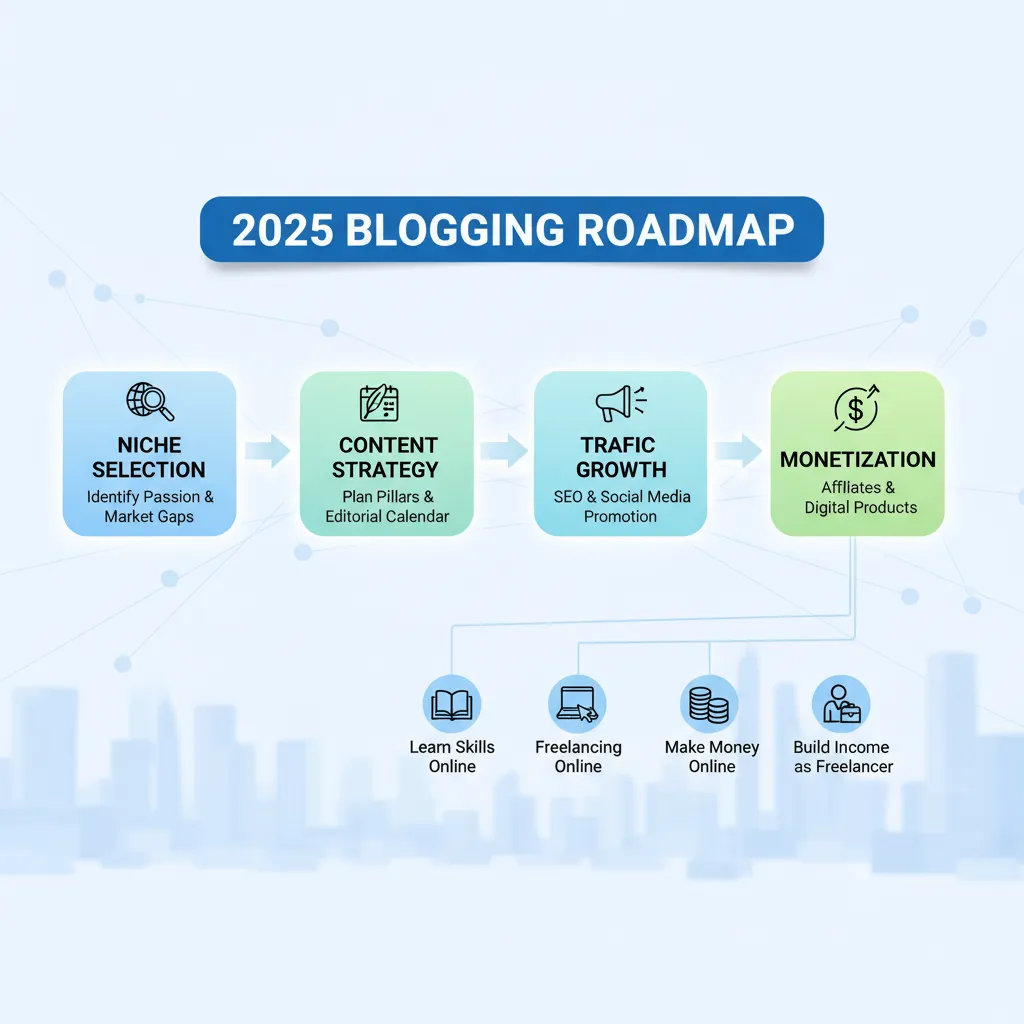
In this guide, I’m not giving you fluff. We are skipping the “follow your passion” clichés. Instead, we are breaking down the exact technical, “Search-First” strategy used by top-earning bloggers to dominate Google rankings and generate passive income. We’ll cover realistic earnings, high-yield niches, and the modern monetization stack you need to succeed.
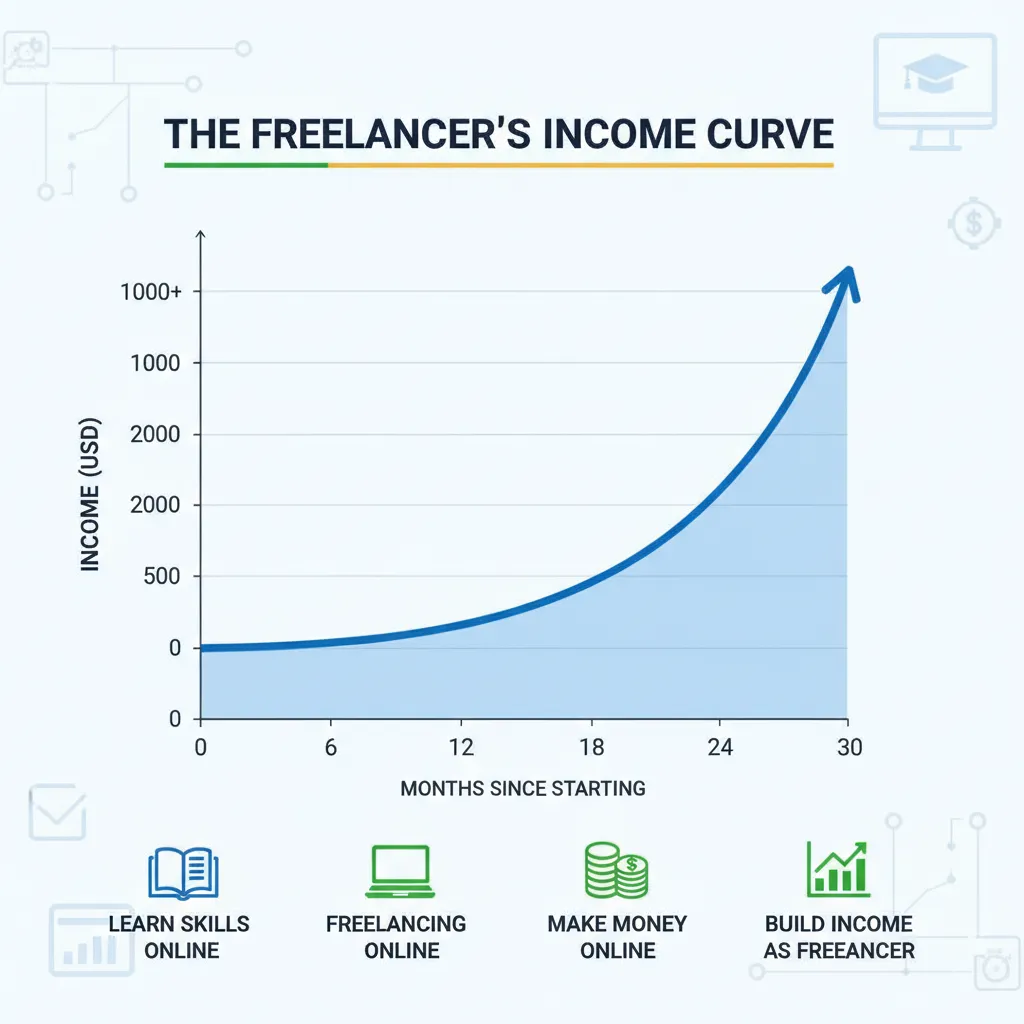
- Why the “22-Month Rule” is critical for your mindset.
- How to target niches with $32+ RPMs (Revenue Per Mille).
- The 5 proven monetization pillars for 2025.
- How to build a content strategy that survives the AI revolution.
The Financial Reality: How Much Do Bloggers Really Earn in 2025?
Before we dive into the “how,” let’s talk about the “how much.” There is a massive misconception that you can set up a WordPress site on Friday and retire by Monday. I’ve seen firsthand how damaging this expectation can be. It leads to burnout.
Average Salaries and Income Brackets
Blogging is a profession, not a lottery ticket. As of late 2025, the average annual pay for a Blogger in the U.S. stands at $62,275, according to ZipRecruiter. That’s a respectable middle-class income, but it averages out the hobbyists with the moguls.
The ceiling, however, is much higher. A 2024 report from Niche Pursuits highlighted that while low-end blogs might earn $2–$5 per 1,000 views via basic AdSense, high-performance blogs in sectors like Finance can command RPMs (revenue per 1,000 impressions) of $30 or more.
The 22-Month Rule: Timeline to Profitability
If there is one statistic you memorize from this article, make it this one: It takes an average of 22 months to start making money with a blog. This data comes from a May 2025 study by Productive Blogging.
This is the “Valley of Death” where most beginners quit. They write for three months, see zero dollars, and assume they failed. They didn’t fail; they just didn’t wait out the gestation period. The same source notes that 28% of bloggers achieve a full-time income within two years. Patience isn’t just a virtue here; it’s a business requirement.
Step 1: Selecting a High-Profit Niche (2025 Trends)
Your niche determines your income cap. You can be the best writer in the world, but if you are writing about “underwater basket weaving,” your audience ceiling—and advertiser budget—is low. In 2025, you need to align with where the money is flowing.
AI, Personal Finance, and Health: The “Power Three”
Advertisers pay more to reach audiences with high intent to purchase. This is why Finance blogs are gold mines. Data from Niche Pursuits (June 2024) shows that Finance blogs have a median AdSense RPM of $32.13. Compare that to a gaming or entertainment blog where you might scrape by with $2 RPM.
However, AI is the new frontier. With U.S. businesses expected to spend nearly $12 billion on affiliate marketing in 2025 alone (AffiliateStatistics.marketing), a huge chunk of that is going toward software and AI tools. Promoting high-ticket software subscriptions (SaaS) offers recurring revenue that physical products can’t match.
Avoiding “Zombie Niches”
A “Zombie Niche” is a topic that is alive but has no transactional value. Personal diaries, general lifestyle blogs without a specific angle, or poetry blogs often fall into this category.
— Darren Rowse, Founder of ProBlogger
To avoid the zombie trap, use the Unique Perspective Framework. If you want to write about travel (a saturated niche), don’t just write “Best places to visit in Paris.” Instead, niche down to “Luxury Travel on Credit Card Points for Solo Female Travelers.” Specificity builds trust, and trust builds revenue.
Five Proven Ways to Monetize a Beginner Blog
Once you have traffic, you need to convert it. Most beginners rely solely on ads, which is a mistake. Here are the five pillars used by pro bloggers in 2025.
1. Affiliate Marketing: Leveraging the $11.2B U.S. Spend
Affiliate marketing is promoting other people’s products and earning a commission. It is projected that businesses will earn an average of $12 for every $1 spent on affiliate marketing in 2025 (Thunderbit). This high ROI for companies means they are desperate for bloggers to promote them.
How to start:
- Software (SaaS): High commissions (20-40%), often recurring.
- Amazon Associates: Low commission (1-4%), but high conversion volume.
- Niche Networks: ShareASale, Impact, and CJ Affiliate.
Interestingly, over 62% of affiliate-driven visits now come from mobile devices, according to Dec 2024 data from FirstPromoter. Ensure your affiliate links and tables are mobile-friendly, or you’re throwing money away.
2. Display Advertising: Beyond Basic AdSense
Google AdSense is the entry point, but it shouldn’t be your end goal. The real money is in premium ad networks like Mediavine or Raptive (formerly AdThrive).
For 2025 beginners, the goal should be “Journey by Mediavine,” a program designed for smaller publishers (usually around 10k sessions). It bridges the gap between the low payouts of AdSense and the high requirements of premium networks. Remember the Niche Pursuits data: moving from a general ad network to a premium one can 5x or 10x your revenue overnight.
3. Digital Products vs. Ads: The 10x RPM Difference
Why send your traffic to someone else when you can sell your own product? RPMs (revenue per 1,000 views) for digital products are 10x higher than display ads, according to a Dec 2025 report by Productive Blogging.
You don’t need to create a masterclass. Start small:
- E-books or Guides.
- Templates (Budget spreadsheets, Notion templates).
- Checklists.

4. Sponsored Content: Pitching with Confidence
You don’t need millions of views to get a sponsor. You need a targeted audience. 59% of people are concerned about distinguishing real from fake content (Reuters Institute, 2024). Brands are desperate for authentic voices to bridge this “trust gap.”
If you have 1,000 monthly visitors who are highly engaged (e.g., they all own Golden Retrievers), a dog food brand will value that more than 10,000 random visitors. Create a media kit and start pitching micro-influencer campaigns early.
5. Services & Consulting: The Fastest Path to Cash
If you need money now, sell a service. Your blog acts as your portfolio. 58% of B2B marketers reported increased sales thanks to content marketing in 2024 (Semrush/CMI). Use your blog posts to demonstrate expertise, then offer consulting, freelance writing, or auditing services.
💰 Blog Revenue Potential Calculator
Estimate your monthly earnings based on traffic and monetization methods.
*Estimates based on 30-day months. Actual earnings vary by niche and seasonality.
The “Technical Stack” for 2025 Monetization
Writing isn’t enough. You need to structure your content for algorithms and humans alike. In 2025, the technical bar has been raised.
Content Depth: Why 1,400+ Words is the New Baseline
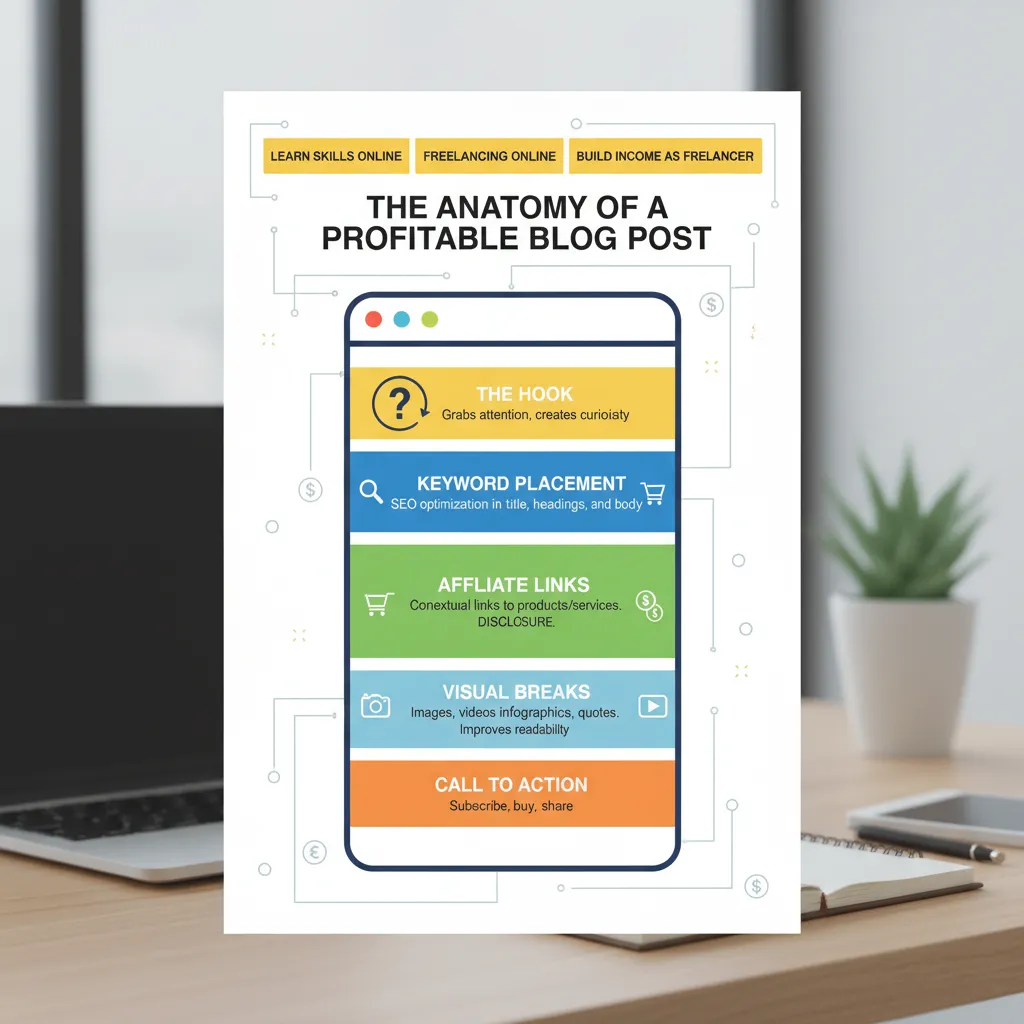
Thin content gets crushed by Google updates. According to Orbit Media’s 2024 study, the average blog post length is now 1,400 words, which is 77% longer than a decade ago.
But don’t just add fluff. “Depth” means covering the topic so thoroughly that the user doesn’t need to click the “back” button. If you are writing about “How to bake bread,” cover the ingredients, the chemistry, the common mistakes, and the best ovens. Be the definitive resource.
AI-Assisted Blogging: Strategy over Syntax
It’s tempting to let AI write everything. Don’t. While 79.3% of affiliate marketers have adopted AI-driven content creation (AffiliateStatistics.marketing, Dec 2025), successful bloggers use it for outlines, research, and ideation—not final drafts.
Google rewards “Experience, Expertise, Authoritativeness, and Trustworthiness” (E-E-A-T). AI cannot provide Experience. Only you can say, “I tried this software and it crashed my computer.” That human insight is your competitive advantage.
Maximizing ROI with Visual & Interactive Content
We live in a visual-first world. Walls of text are conversion killers.
The Infographic Advantage
If you want your content to be shared, make it visual. Infographics are 30 times more likely to be read than written articles, according to HubSpot/DemandSage 2024 data.
Pro Tip: Use tools like Canva to turn your data points (like the ones in this article) into simple Pinterest-friendly graphics. This drives traffic from image search, which is often less competitive than text search.
Case Studies: It’s Still Possible
You might be thinking, “This is great for established sites, but what about new ones?”
Consider the 2024 case study from ODI Productions, which showed a beginner blog scaling from 150 to 12,000 monthly organic visits in just 3 months. How? They used a low-DR (Domain Authority) domain and focused entirely on low-competition, high-intent keywords, avoiding the “whale” keywords dominated by giants like Forbes.
Another example is Startup House, which implemented in-depth tutorials and saw a 30% increase in revenue (Penfriend.ai, March 2024). The lesson? Soluion-oriented content pays.
— Brian Clark, Copyblogger
FAQ: Common Questions for Beginner Bloggers
Can beginners really make money blogging in 2025?
Absolutely. While the market is competitive, the affiliate spend is growing to $37.3 billion. The key is niche selection. Beginners fail when they try to be everything to everyone. Niche down, solve specific problems, and you can monetize.
How many views do I need to make money?
You can make money with as few as 1,000 targeted visitors if you use affiliate marketing or sell services. For display ads (AdSense), you generally need 10,000+ monthly views to see significant income ($100+).
Is blogging still profitable after AI?
Yes, but the type of profitable content has changed. Generic informational content is being eaten by AI. However, content based on personal experience, unique data, and human storytelling is more valuable than ever because AI cannot replicate it.
How much does AdSense pay per 1,000 views?
It varies wildly. In general niches, expect $2–$5. In high-value niches like finance, insurance, or B2B tech, it can range from $20 to over $30 per 1,000 views.
Conclusion: Building Your 2025 Profit Machine
Making money blogging in 2025 isn’t about luck; it’s about data, patience, and execution. The days of posting a 500-word diary entry and waiting for cash are over.
To succeed, you must:
- Treat your blog as a business from Day 1.
- Choose a niche with high RPM potential (Finance, Tech, Health).
- Diversify income streams (Affiliate + Ads + Products).
- Commit to the “22-Month Rule” and push through the quiet period.
The affiliate market is growing. The audience is there. The only variable left is your willingness to do the work. Start writing, stay consistent, and focus on providing undeniable value.
