


Earn Money by Testing Websites from Home: The Ultimate 2025 Authority Guide
Imagine getting paid to browse your favorite websites. It sounds like one of those “too good to be true” internet ads, right? I was skeptical too when I first stumbled upon remote usability studies years ago. But in 2025, companies are spending billions to ensure their digital experiences are flawless, and they need real people—like you—to tell them what’s working and what isn’t.
This isn’t about clicking ads or filling out mind-numbing surveys for pennies. We are talking about legitimate user research where your opinion directly influences how major brands build their products. Whether you are a student, a stay-at-home parent, or a tech enthusiast looking for a side hustle, website testing has evolved into a sophisticated, high-paying gig economy sector.
In this guide, we aren’t just listing sites. We are going to break down the exact strategies you need to qualify for high-paying tests (up to $150 per hour), the equipment you actually need, and the 10 verified platforms dominating the market right now. If you’re ready to turn your feedback into income, let’s get started.
The Rise of the “Experience Economy” in 2025
Why would a company pay you $10 just to talk about a website for 20 minutes? The answer lies in the massive financial stakes of user experience (UX). In the digital age, a confusing website doesn’t just annoy customers; it drives them to the competition instantly.
According to UserGuiding (April 30, 2025), every $1 invested in UX results in a return of $100.
Companies aren’t paying you out of charity; they are paying you because it’s a smart investment. A 2024 report from UserTesting shows that shoppers encountering two or more obstacles are 34% less likely to return to a retail site. That loss of customer loyalty costs brands millions, making your $10 testing fee look like pocket change in comparison.
The market for this work is exploding. According to Fortune Business Insights (2024), the global UX research software market was valued at over $427 million in 2024 and is projected to more than double by 2032. This means more platforms, more tests, and more opportunities for remote workers.
Furthermore, with about 22-27.9% of the workforce expected to be remote in 2025 according to EasyStaff, the infrastructure for working from home has never been more robust. You aren’t just a “tester”; you are a remote consultant in the digital experience economy.
Top 10 High-Paying Platforms to Test Websites in 2025
Not all testing sites are created equal. Some are goldmines; others are ghost towns. Based on current payout consistency, project volume, and user feedback, here is the definitive list for 2025.
1. UserTesting: The Industry Gold Standard
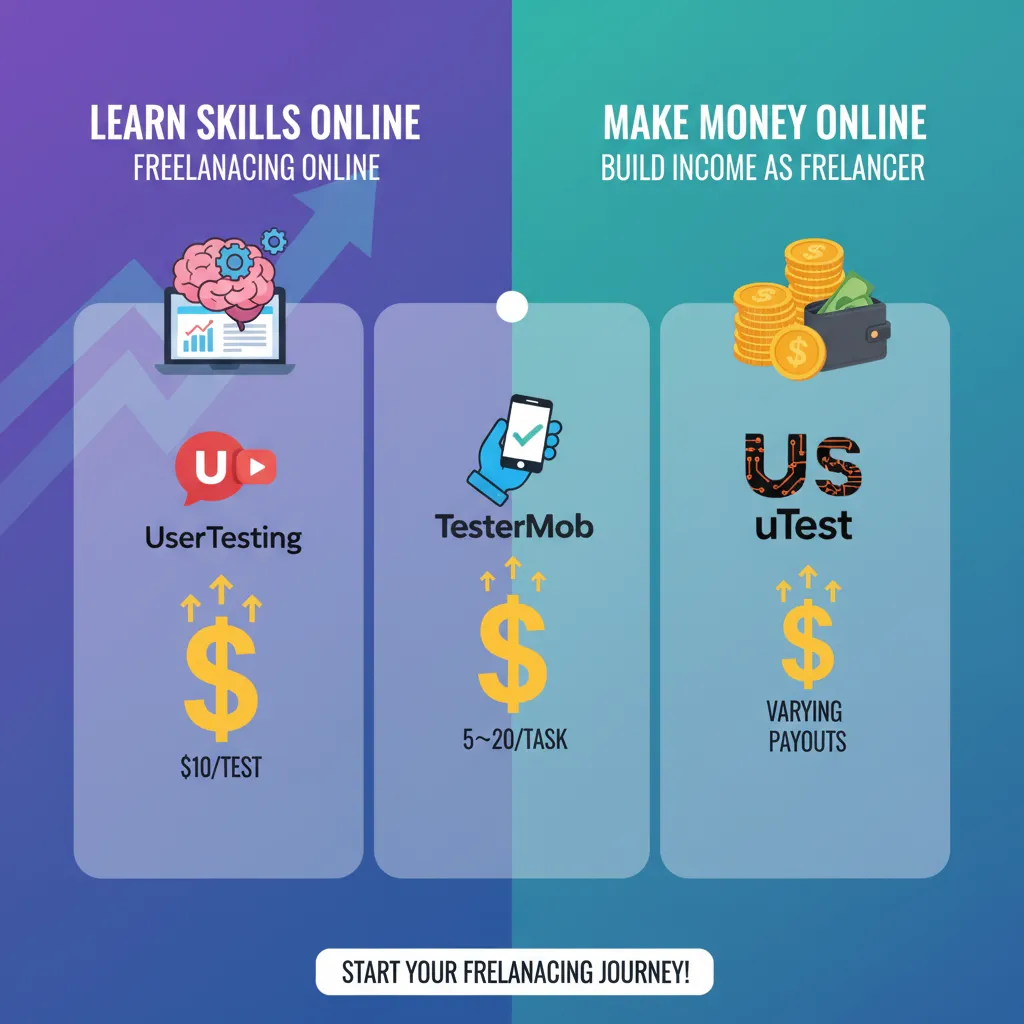
UserTesting remains the heavyweight champion of the industry. It’s the platform I recommend most beginners start with because of its reliability. They work with top-tier clients like HP, Samsung, and Adobe.
- Pay: $10 for a 20-minute unmoderated test; $30-$120 for live interviews.
- Pros: Huge volume of tests; reliable PayPal payments exactly 7 days after the test.
- Cons: High competition. You need to be fast when email notifications pop up.
2. TesterMob: The 2025 “Fast-Payout” Challenger
TesterMob has gained significant traction recently by focusing on high-payout platform reviews and a more modern interface. They are positioning themselves as the “Best Choice for 2025” by streamlining the screener process.
3. uTest: Best for Bug Hunting and QA Careers
If you have a technical itch to scratch, uTest is your home. Unlike standard usability testing, uTest focuses heavily on finding bugs (functional testing). Projects here are more complex but can pay significantly more if you are good at spotting glitches.
4. Userlytics: Global Opportunities
One frustration I hear often is, “I don’t live in the US, can I still test?” Userlytics is fantastic for international testers. Their “blind” tests allow you to record your screen and voice without needing a face cam for every single project, though many high-paying ones do require it.
5. Trymata (formerly TryMyUI)
Trymata offers a solid flow of tests. They pay consistently, though they are notorious for strict grading. If a client rejects your test because you didn’t talk enough, you don’t get paid. It keeps you on your toes.
Quick Comparison of Top Sites
| Platform | Avg. Pay (20 mins) | Payment Method | Difficulty |
|---|---|---|---|
| UserTesting | $10 | PayPal | Medium |
| TesterMob | Varies | PayPal/Bank | Easy |
| uTest | Project-based | PayPal/Payoneer | Hard (Technical) |
| Userlytics | $5 – $90 | PayPal | Medium |
| Intellizoom | $5 – $8 | PayPal | Easy |
Requirements & Equipment: What You Need to Get Started
You don’t need a professional studio, but you do need gear that doesn’t scream “amateur.” Clients are paying for clear audio and video. If they can’t hear your feedback, they can’t fix their website.
Hardware Essentials
- High-Speed Internet: Most platforms require at least 5 Mbps upload speed to stream your screen recording without lag.
- Microphone: Do not rely on your laptop’s built-in mic. Even a cheap USB headset or a budget lapel mic ($20 range) makes a massive difference. Audio clarity is the #1 reason tests get rejected.
- Webcam: Many modern tests, especially the high-paying “Live Conversation” types, require you to be on camera.
- Computer/Mobile: A PC or Mac running the latest OS. For mobile app testing, having both an iPhone and an Android device increases your qualification chances.
The “Soft Skills” Advantage: Thinking Out Loud
This is the secret sauce. The client doesn’t just want to know that you clicked a button; they want to know why. This is called the “Think Aloud” protocol.
When you are testing, you need to vocalize your stream of consciousness. Instead of silently clicking “Checkout,” you should say: “I’m looking for the checkout button, but the orange color blends in with the background. I feel a bit frustrated because I expected it to be in the top right corner.”
How Much Can You Actually Earn? (The Data-Backed Reality)
Let’s have an honest conversation about money. Is this going to replace a full-time salary? Probably not immediately. Is it a legitimate side hustle? Absolutely.
According to HelpSaveMoney (Jan 8, 2024), website testers can expect to earn around £8 to £15 ($10-$20) per 20-minute test in 2025. That equates to a functional hourly rate of $30-$60, assuming you could fill every hour with tests (which you can’t).
The Income Tiers
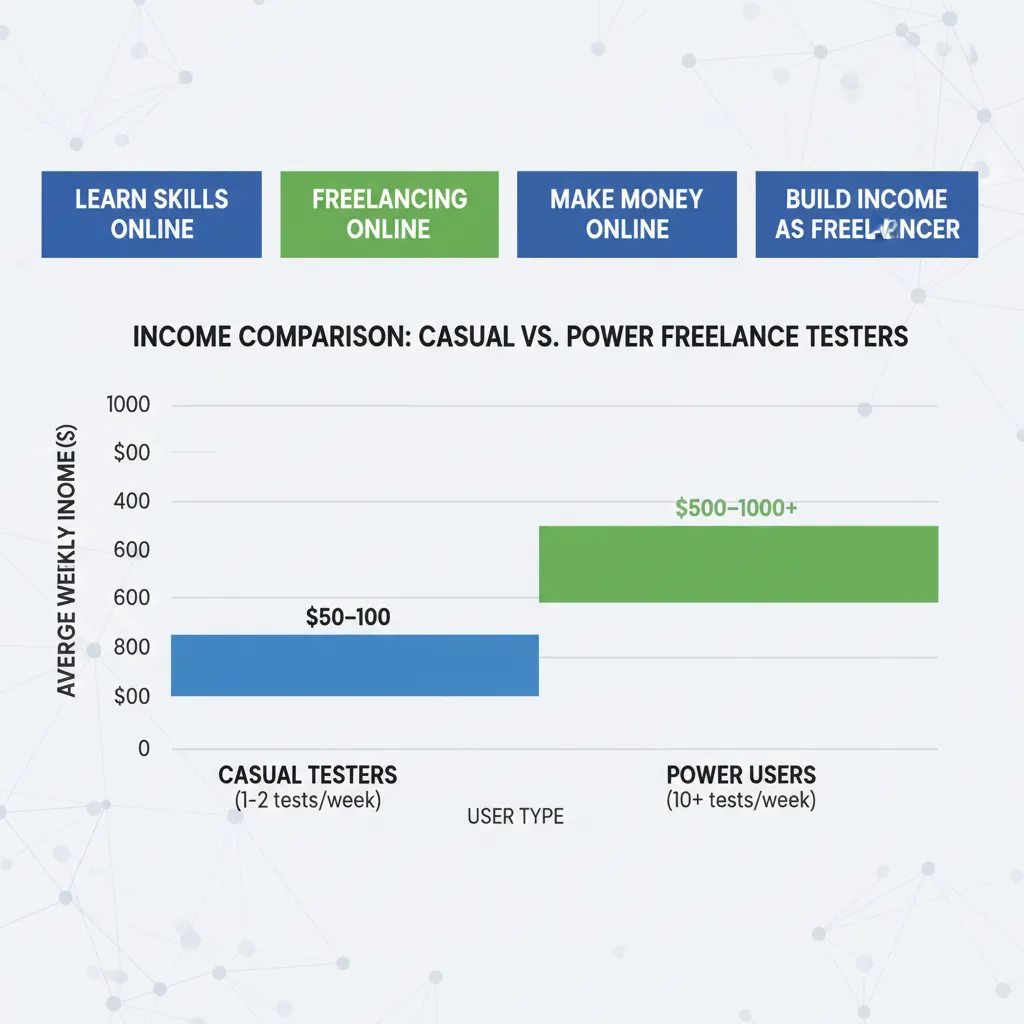
- Standard Unmoderated Tests: $10 per test. These take 15-20 minutes. You record your screen and voice independently.
- Live Conversations: $30 (30 mins) to $60 (60 mins). These are Zoom-style calls with a researcher.
- Focus Groups: $100+. These are rarer but pay the best for specific demographics.
To give you a realistic idea, a freelance tester on TesterWork reported earning $72.07 in one hour by combining a standard test cycle with bug reporting and a follow-up survey in August 2025 (Source: Medium). While that’s an exceptional hour, it shows the potential when stars align.
Estimate Your Earnings
Use the calculator below to see what your weekly “side hustle” income could look like based on realistic test volume.
💰 Weekly Earnings Estimator
5 Pro-Tips to Qualify for More Tests
The biggest complaint I hear is: “I never qualify for tests!” This usually happens during the “screener”—a short quiz before the test to see if you match the target audience. Here is how to improve your odds.
1. Optimizing Your Demographic Profile
Be honest, but be thorough. If you enjoy video games, list every console you own. If you work in IT, specify your exact role. The more specific your profile, the more niche (and higher paying) tests you will trigger.
2. Mastering the “Screener” Process
Don’t just click “Yes” on everything. Screeners often include trap questions to weed out liars. If a screener asks if you have been to the moon recently, and you click “Yes,” you are banned. Read carefully.
3. Strategies for Avoiding “Tester Burnout”
It can be exhausting to talk to your computer for hours. Jakob Nielsen, a UX pioneer, famously said, “Pay attention to what users do, not what they say.” However, as a tester, you must bridge that gap. Take breaks. If you sound bored or tired, your rating will drop, and you will receive fewer invites.
Frequently Asked Questions (FAQ)
Is website testing from home real?
Yes, it is a critical part of the $1B UX research industry. Major companies like Google, Ford, and Amazon rely on platforms like UserTesting to improve their products. It is not a “get rich quick” scheme, but it is a legitimate service exchange.
How much do website testers get paid?
The industry standard is $10 for a 20-minute unmoderated test. However, live interviews can pay between $60 and $150 per hour. Specialized platforms like UserInterviews often pay significantly higher for professionals (e.g., software engineers or medical staff).
Do I need a degree to test websites?
No. Companies are looking for “real people.” In fact, sometimes having too much technical knowledge is a disadvantage because they want to see how an average person navigates their site.
Can I test websites on my phone?
Absolutely. Mobile testing is a huge growth area. Platforms like UserPeek and Trymata have dedicated apps. In my experience, mobile tests are often shorter and easier to complete than desktop ones.
Conclusion: Your Next Steps
The digital landscape of 2025 offers unprecedented opportunities to earn money by testing websites from home. With the remote workforce expanding and the ROI of UX research hitting 9,900%, the demand for articulate, reliable testers is higher than ever.
This isn’t just about extra cash; it’s about influencing the digital world we live in. Every time you point out a broken link or a confusing menu, you are making the internet a little bit better for the next person.
Your Action Plan:
- Sign up for UserTesting and TesterMob today.
- Invest in a decent $20 USB microphone.
- Practice talking out loud while browsing your favorite store.
- Complete your profiles honestly and thoroughly.
The work is there. The money is there. All that’s left is for you to log in and start speaking your mind.
