

The 10 Most In-Demand Digital Skills for 2025: A Data-Driven Guide to Future-Proofing Your Career
We are standing on the precipice of the most significant workforce shift since the industrial revolution. You’ve likely felt it—the anxiety when a new AI tool drops, or the confusion when job descriptions start asking for “agentic workflows” instead of just “project management.”
Here is the reality: While 92 million roles face displacement by 2030, the World Economic Forum predicts a net employment increase of 78 million new jobs. These roles aren’t vanishing; they are evolving. They are waiting for professionals who possess the right digital toolkit.
I’ve spent the last decade analyzing labor market trends, and 2025 feels different. It’s no longer about “learning to code” in a vacuum. It’s about hybrid capabilities—where technical prowess meets human intuition. Based on deep-dive reports from LinkedIn, WEF, and McKinsey released in late 2024 and early 2025, I’ve compiled the definitive roadmap for your career survival and growth.
If you want to ensure your relevance in the next economy, you need to look beyond the buzzwords. Let’s break down exactly what employers are desperate to hire for right now.
1. Artificial Intelligence: Beyond Prompt Engineering to “Agentic” Systems
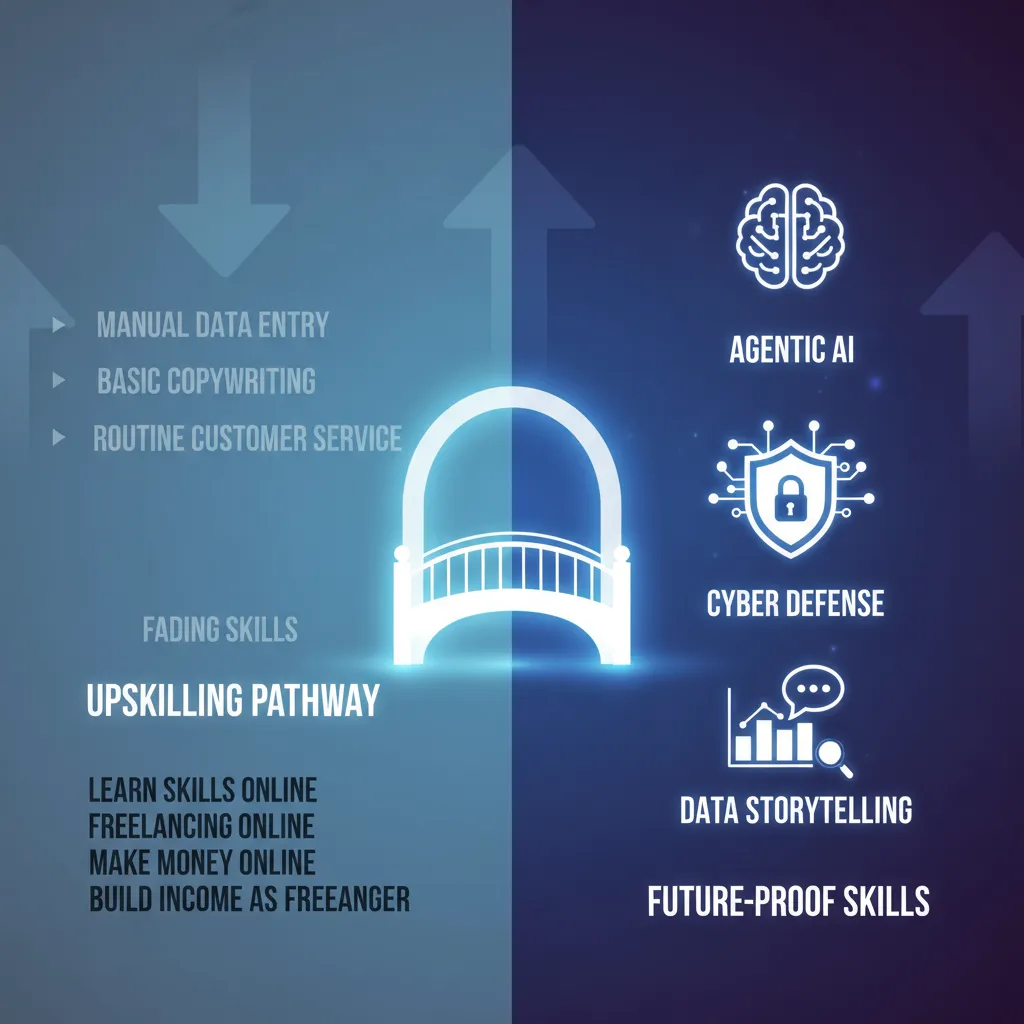
Two years ago, the advice was simply “learn ChatGPT.” In 2025, that is the baseline, not the advantage. The market has shifted aggressively toward Agentic AI—systems that don’t just generate text but execute complex tasks independently.
According to Coursera’s Global Skills Report 2024, enrollment in Generative AI courses surged by an incredible 1,060% year-over-year. However, the high-paying opportunities now lie in building and managing these agents.
Building and Managing AI Agents
Employers are no longer impressed that you can write a prompt. They want to know if you can chain prompts together to automate a workflow. This requires familiarity with frameworks like LangChain and a foundational grasp of Python.
A 2025 Tech Labor Market Study by McKinsey reveals that 57% of Agentic AI job postings now require Python proficiency. You don’t need to be a software engineer, but you must understand the logic of how AI agents “think” and “act.”
AI Ethics and Governance (AI TRiSM)
With power comes liability. As companies integrate AI, they are terrified of hallucinations and data leaks. This has birthed a massive demand for skills in AI Trust, Risk, and Security Management (AI TRiSM).
The Executive Priority
72%
of U.S. CEOs state that Generative AI is their top investment priority for 2025, but cite “risk management” as the primary bottleneck.
Source: KPMG/Coursera Global Insights
In my experience consulting with mid-sized firms, the person who can say, “Here is how we use AI safely and ethically,” instantly becomes the most valuable person in the room.
2. Data Science & Advanced Analytics: The Storytelling Imperative
Data has always been oil, but in 2025, it’s useless without an engine. The era of the silent data analyst is over. The new demand is for Data Storytelling—the ability to translate complex SQL queries and Python visualizations into clear, actionable business strategies.
Translating Metrics into Profit
It’s not enough to present a dashboard. You must explain *why* the numbers matter. McKinsey highlights that organizations leveraging advanced data analytics to drive strategy see significantly higher margins.
Take Netflix as a prime example. They didn’t just collect viewing data; they utilized advanced predictive machine learning to create hyper-personalized content clusters. This “data-first” decision-making led to a documented 25% increase in user retention.
— Saadia Zahidi, Managing Director, World Economic Forum
3. Cybersecurity: The “Zero Trust” Mandate
If you are looking for job security, look no further than cybersecurity. The gap between the threats we face and the people capable of stopping them is widening.
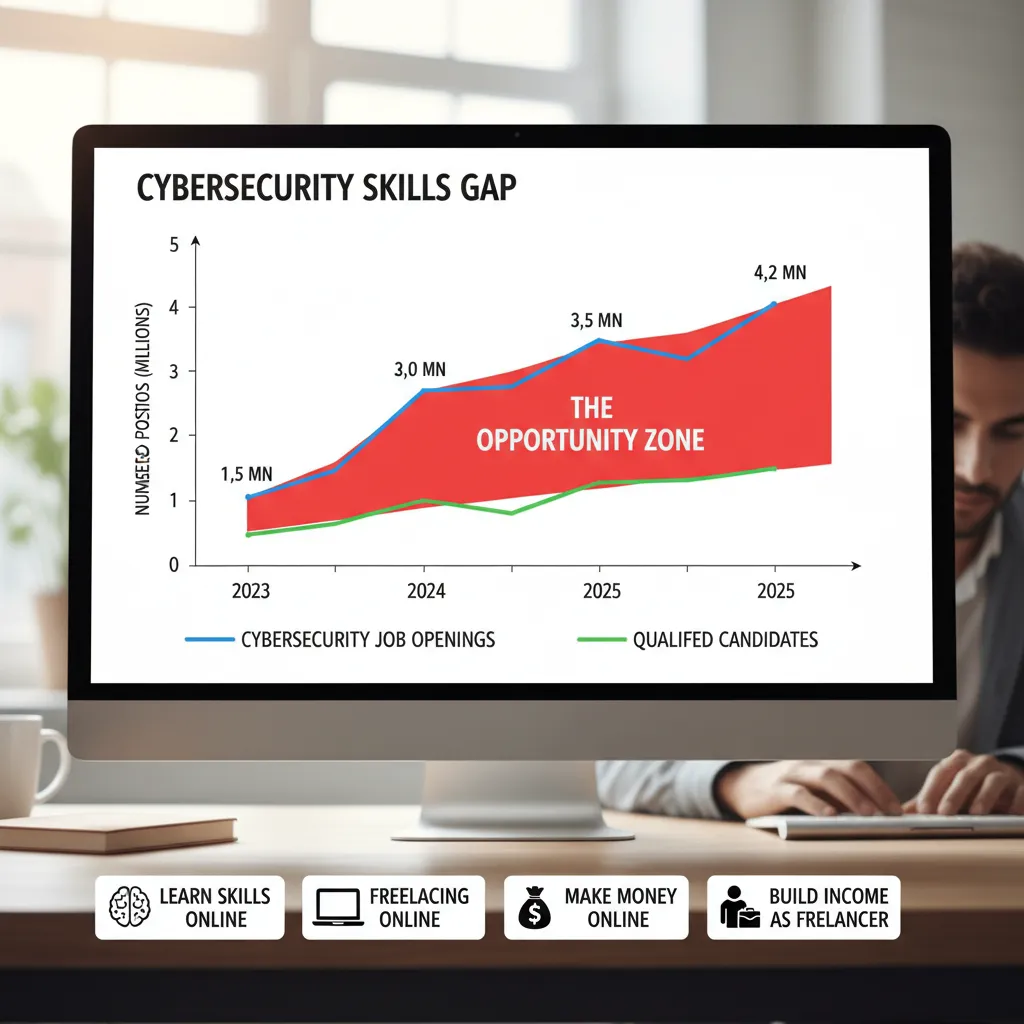
According to the ISC2 2025 Cybersecurity Workforce Study, 59% of security professionals cite “critical or significant” skills gaps in their teams. This is up from 44% the previous year. The desperation for talent is palpable.
Cloud Security & Continuous Exposure Management
The perimeter is gone. With remote work and cloud infrastructure (AWS, Azure, GCP), the new standard is “Zero Trust”—never trust, always verify. Skills in Cloud Security Posture Management (CSPM) and Continuous Threat Exposure Management (CTEM) are commanding premium salaries.
Debra Taylor, Acting CEO of ISC2, put it bluntly: “This year’s data makes it clear that the most pressing concern for cybersecurity teams isn’t headcount but skills.” If you can learn the fundamentals of cloud defense, you are practically unignorable in this market.
4. Next-Gen Digital Marketing: The AEO Shift
I’ve been in marketing for years, and the shift happening right now is jarring. Traditional SEO (Search Engine Optimization) is morphing into AEO (Answer Engine Optimization). With Google’s AI Overviews and ChatGPT Search, users aren’t clicking ten blue links anymore; they are getting the answer directly.
Optimizing for Machines and Humans
To survive this, marketers need to understand Entity Salience and structured data. You aren’t just writing for a reader; you are training an AI to recognize your brand as the authority.
Furthermore, video is eating the world. A 2025 State of Marketing report from HubSpot indicates that 51% of marketers now use AI tools specifically for video content repurposing. The skill isn’t just “video editing”—it’s “video strategy.” Can you take one webinar and turn it into 15 TikToks, a YouTube short, and a LinkedIn video using AI tools? That is the workflow of 2025.
Consider the case of “Emma,” a freelancer highlighted in the Upwork Most In-Demand Skills 2024 report. Without a traditional marketing degree, she leveraged TikTok-specific SEO and video editing skills to drive $10,000 in revenue for a single small client. This proves that skills-based hiring is trumping credentials.
5. Software Development: The Rise of the “Citizen Developer”
Is coding dead? Absolutely not. But “coding from scratch” is on life support. The future belongs to the Citizen Developer—someone who uses Low-Code/No-Code (LCNC) platforms to build solutions without waiting for IT.
The Python MVP
If you learn one language, make it Python. It is the connective tissue of the modern internet. It powers AI, it automates data analysis, and it runs backend servers. It is the “English” of the programming world.
However, for business efficiency, platforms like Microsoft Power Apps or Bubble are exploding. Being able to spin up an internal tool in an afternoon using a drag-and-drop interface is a skill that saves companies thousands of dollars. It bridges the gap between technical feasibility and business need.
6. Human-Centric UX & Interaction Design
Here is the paradox: As AI gets better, human skills become more valuable. When content is cheap, User Experience (UX) becomes the premium differentiator.
Spatial Computing & Immersive Experiences
With Apple’s Vision Pro and Meta’s Quest headsets entering the mainstream workspace, 3D interface design is a burgeoning field. Retailers like IKEA and Sephora have already implemented spatial computing skills to reduce return rates by allowing virtual product “try-ons.” This isn’t sci-fi; it’s commerce.
Soft Skills are the New Hard Skills
I know, “soft skills” sounds fluffy. But in an age of AI agents, human oversight is critical. Jeff Maggioncalda, CEO of Coursera, noted that “the rise of Generative AI underscores the pressing need for new strategies to build a competitive workforce.”
That strategy involves critical thinking, empathy, and negotiation. An AI can generate a contract, but it cannot negotiate the nuances of a partnership. An AI can diagnose a customer service issue, but it cannot empathize with a frustrated client to retain their loyalty.
⚡ Interactive: Which Skill Should You Learn First?
Select the statement that best describes you to find your high-leverage skill for 2025.
Frequently Asked Questions (FAQ)
Is coding still a high-demand skill in 2025?
Yes, but the nature of coding has changed. “Code monkey” jobs (writing boilerplate code) are being automated by AI. The demand has shifted to Software Architecture and Full-Stack Development where you oversee the AI that writes the code. According to the Upwork 2024 report, “Full Stack Development” remains a top-tier earning category.
What are the best digital skills for non-tech people?
If you aren’t technical, focus on Digital Project Management and AI Literacy. Learning how to effectively prompt AI, manage digital transformation projects, and use no-code tools like Zapier or Notion for automation allows you to be highly productive without writing a single line of code.
How long does it take to learn these skills?
You don’t need a four-year degree. Most of these skills can be learned via “micro-credentials.” Coursera reports that learners can acquire job-ready proficiency in areas like Data Analytics or Digital Marketing in 3 to 6 months with consistent study.
Conclusion: Your 90-Day Upskilling Plan
The pace of change is frightening, I get it. But it also levels the playing field. In 2025, your adaptability matters more than your pedigree. The professionals who will thrive aren’t necessarily the ones with computer science degrees from the 90s—they are the ones reading Coursera’s Global Skills Report today and taking action tomorrow.
Here is my challenge to you for the next 90 days:
- Month 1: Audit & Awareness. Pick one area from this list. Spend 10 hours understanding the vocabulary. Read the WEF Future of Jobs report sections relevant to your industry.
- Month 2: The “Hello World” Phase. Build something small. Create an automation, write a data story, or audit your personal cybersecurity. Get your hands dirty.
- Month 3: Showcase. Don’t just learn it; prove it. Update your LinkedIn profile not with “skills,” but with “projects.”
The digital divide in 2025 isn’t about access to the internet anymore; it’s about access to the skills that harness it. You have the map. Now, take the first step.
