
15 Best Websites to Learn New Job Skills in 2025: Ranked by ROI & Authority
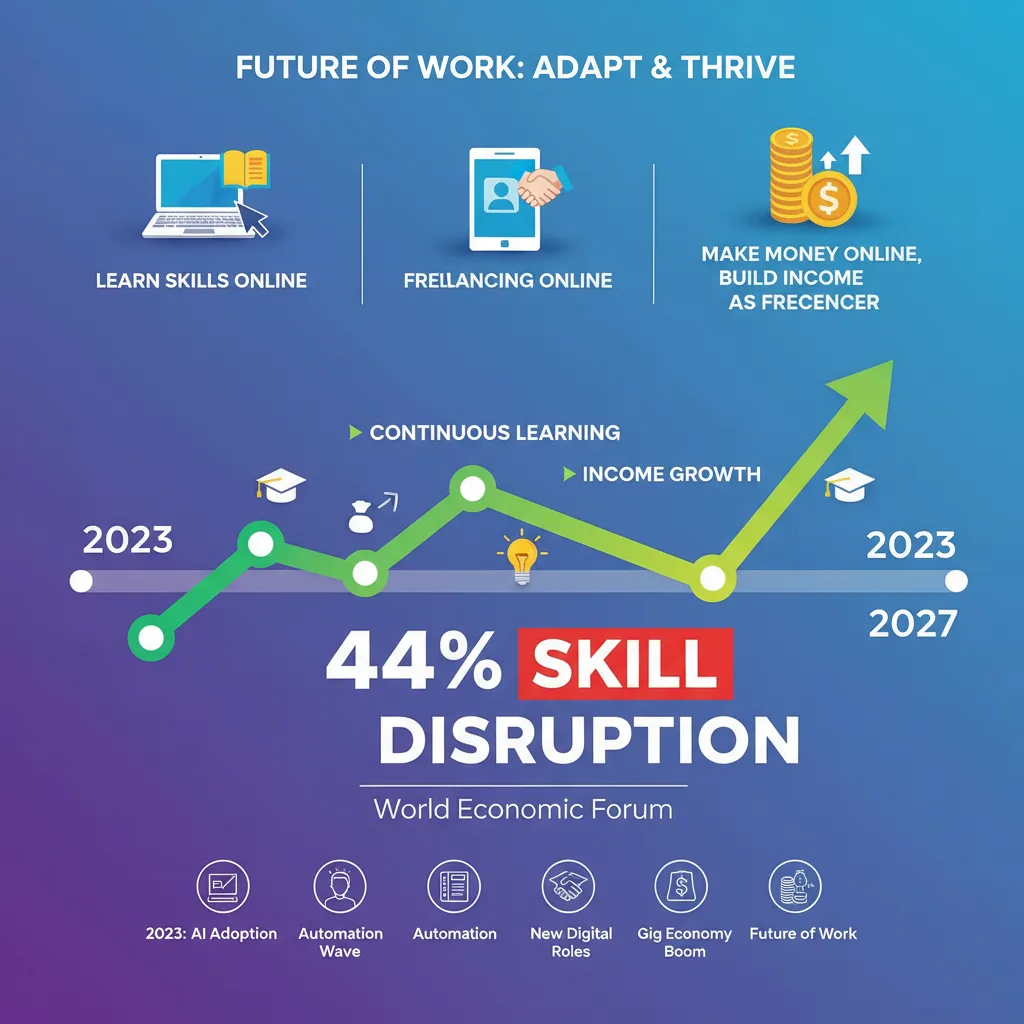
We are standing at the edge of a massive workforce transformation. In fact, you might be feeling the pressure already. According to the World Economic Forum’s Future of Jobs Report 2025, a staggering 44% of workers’ core skills are expected to be disrupted between now and 2027. Think about that—nearly half of what you do daily could change in the next 24 months.
I’ve spent the last decade working in digital strategy and recruitment, and I’ve never seen a shift this aggressive. The old advice was “go back to school.” The new reality? You don’t have time for a two-year degree when the technology changes every six months. You need agility.
But here is the problem: the internet is flooded with “courses.” How do you separate a verified credential that leads to a salary bump from a generic playlist that wastes your time?
In this guide, I’m cutting through the noise. We aren’t just listing websites; we are analyzing them based on Return on Investment (ROI), Employer Recognition, and 2025 market relevance. Whether you need to pivot into AI, sharpen your leadership soft skills, or get certified in project management, these are the platforms that actually move the needle.
The Skills Gap Crisis: Why Upskilling is Non-Negotiable in 2025
Before we dive into the platforms, you need to understand the stakes. This isn’t just about getting a promotion; it’s about staying relevant. The rise of Generative AI has accelerated the need for technical fluency, but it has also created a paradox: as machines get smarter, human skills become more valuable.
According to the Coursera 2024 Global Skills Report, there was a 1,060% year-over-year increase in global GenAI course enrollments.
Jeff Maggioncalda, CEO of Coursera, put it perfectly in their latest report: “In 2023, a learner signed up for a GenAI course on Coursera every minute; by 2024, this rate had quadrupled.” The workforce is voting with their time.
However, it’s not just about coding. A 2025 report from LinkedIn Learning found that 91% of Learning & Development (L&D) professionals believe human skills (soft skills) are more valuable than ever in the AI era. The sweet spot for 2025 is the “Hybrid Skill Set”—technical proficiency mixed with critical thinking.
Top-Tier Academic & Accredited Platforms
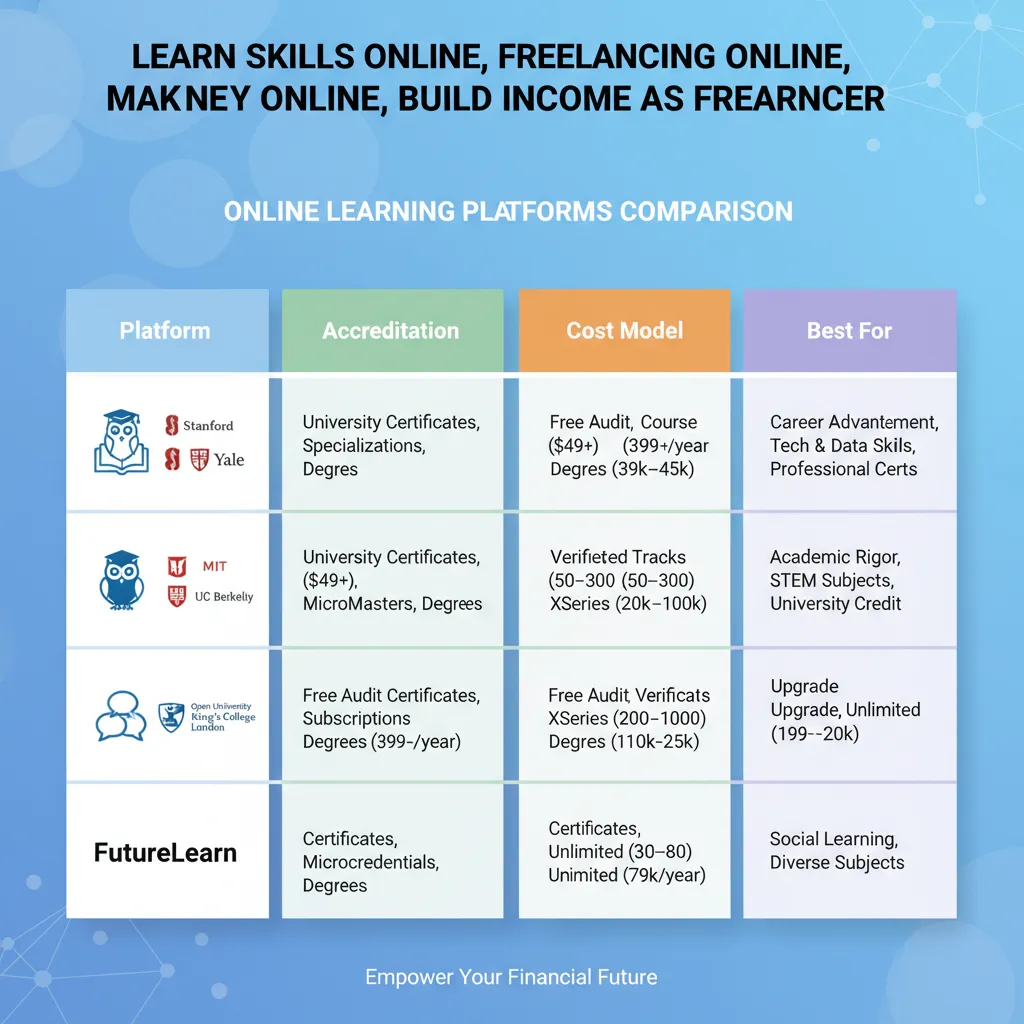
If you are looking for prestige and credentials that carry weight on a resume (similar to a university degree), these are your best options. These platforms partner directly with Ivy League schools and top-tier institutions.
1. Coursera
Best For: University-backed credentials and degrees.
Coursera remains the heavyweight champion of online learning. Unlike other platforms that rely on individual creators, Coursera’s content comes from partners like Yale, Stanford, and Google. In my experience, this is the safest bet if you are looking to impress a traditional employer.
Recently, they’ve aggressively expanded into “Gateway Certificates.” For example, data from Google’s 2024 Impact Report shows that over 70% of Google Career Certificate graduates (hosted on Coursera) report a positive career outcome within six months.
✅ Pros
- Certificates issued by universities (e.g., Duke, Imperial College London).
- “Audit” feature allows you to learn for free (without the certificate).
- Financial aid is available for most courses.
❌ Cons
- Strict enrollment dates for some courses.
- Peer-graded assignments can sometimes be slow or inconsistent.
2. edX
Best For: Professional Certificates and MicroMasters.
Founded by Harvard and MIT, edX is the rigorous cousin to Coursera. I often recommend edX to professionals who already have a degree but need deep, specialized knowledge. Their “MicroMasters” programs are game-changers—they are graduate-level courses that count as credit toward a full Master’s degree if you decide to pursue one later.
It’s worth noting that completion rates on paid courses here hover between 40-60%, significantly higher than the 5-10% seen in free MOOCs, according to 2024 data from Class Central. Putting skin in the game matters.
3. FutureLearn
Best For: Global academic perspective and social learning.
Based in the UK, FutureLearn offers a slightly different pedagogical approach. They focus heavily on “social learning”—encouraging discussion in the comment sections of every step. If you find solitary video-watching boring, FutureLearn’s community-driven model is refreshing.
Skill-Specific & Practical Training Sites
Sometimes you don’t need a certificate from Harvard; you just need to know how to use Excel, design a logo, or manage a project today. These platforms prioritize practical application over academic theory.
4. LinkedIn Learning
Best For: Business soft skills and networking integration.
Here is a strategy many people miss: When you finish a course on LinkedIn Learning, it adds a verified badge directly to your LinkedIn profile. This signals to recruiters immediately that you are active. With 91% of L&D pros prioritizing continuous learning, having these badges visible is a low-effort, high-reward tactic.
I personally use this for “just-in-time” learning. Need to have a difficult conversation with a subordinate? Watch a 20-minute module on conflict resolution. It’s practical and fast.
5. Udacity
Best For: Tech Bootcamps and “Nanodegrees”.
Udacity is expensive, but it works. They treat their “Nanodegrees” like mini-bootcamps with human code reviews and career coaching. According to their 2024 Impact Report, 73% of graduates reported changing careers after completing a course. If you are trying to switch from marketing to data science, the hands-on projects here are superior to watching passive videos.
6. Udemy
Best For: Niche practical skills and affordability.
Udemy is the “marketplace” of learning. Anyone can teach, which means quality varies, but breadth is unmatched. Want to learn a specific software tool that came out last week? It’s probably on Udemy before it’s on Coursera.
Pro Tip: Never pay full price. Udemy runs sales almost every week where $100 courses drop to $12.99.
High-Authority Tech & Corporate Academies
In 2025, the best way to get hired by a tech giant is often to get certified by that tech giant. These companies have bypassed traditional education to train their own workforce.
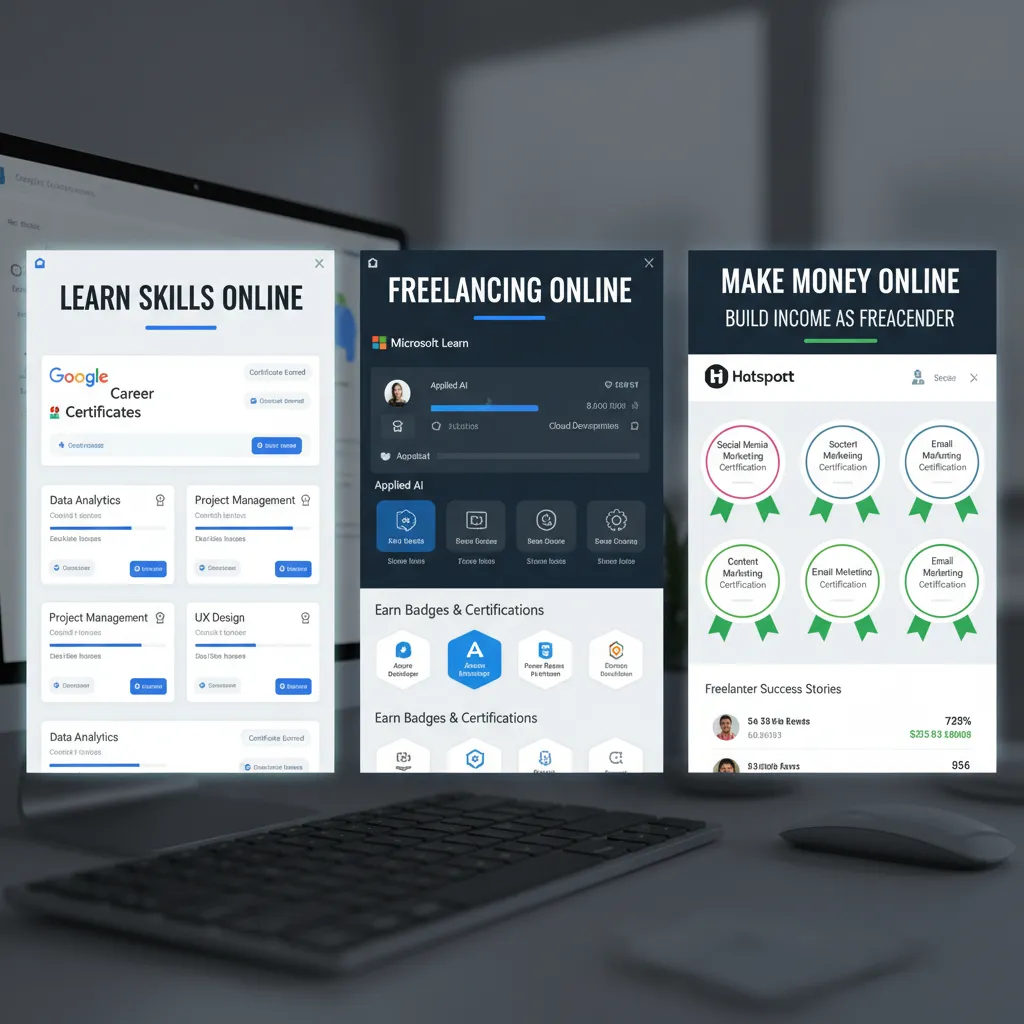
7. Google Career Certificates
Hosted on Coursera but managed by Google, this program is the gold standard for entry-level tech jobs. I’ve seen resumes completely transformed by this.
“We’re proud that the Google Career Certificates program has helped over one million people learn in-demand skills to advance their careers.”
— Lisa Gevelber, Founder, Grow with Google (May 2025)
Take the case of Ray Bryant. As detailed in the 2025 Google Blog, Ray transitioned from customer service to a Data Center Tech role at Google with a $20,000 salary increase after completing the IT Support Certificate. This is real ROI.
8. Microsoft Learn
Best For: Azure, AI, and Cloud Infrastructure.
With cloud computing being a dominant force, Microsoft Learn offers free paths to prepare for certifications like Azure Fundamentals. These are rigorous exams, but passing them is an industry-recognized stamp of competence.
9. HubSpot Academy
Best For: Digital Marketing and Sales.
If you are in marketing, HubSpot certification is practically a requirement. It is 100% free and widely respected. I often tell junior marketers that a HubSpot Content Marketing certificate is worth more to me than a generic “Marketing 101” college credit because it shows they know the modern toolset.
Data-Driven Selection: How to Choose?
With so many options, how do you decide where to invest your money? I’ve broken it down based on what you actually get out of it.
| Platform | Cost Model | Certification Value | Best Use Case |
|---|---|---|---|
| Coursera | Subscription / Per Course | High (University/Corporate) | Career pivot & Academic credit |
| Udacity | High Monthly Fee | High (Portfolio based) | Getting “Job Ready” for Tech |
| LinkedIn Learning | Monthly Subscription | Medium (Social Proof) | Soft skills & Management |
| Udemy | Per Course | Low (Skill based) | Learning specific tools |
| Google/Microsoft | Mixed (Free/Paid) | High (Industry Standard) | Specific technical roles |
According to IntuitionLabs’ 2025 Data Analysis, UK tech firms cut graduate roles by 46% between 2023 and 2024 but increased hiring for candidates with specific AI certifications. This shift validates the strategy of prioritizing “Skill-Based” certifications over general degrees.
Maximizing Your ROI: From Certificate to Paycheck
Finishing the course is only half the battle. You have to market it. I’ve reviewed thousands of resumes, and the biggest mistake people make is burying their new skills at the bottom.
How to Display Skills on Your Resume
Don’t just list “Coursera” under education. Create a “Projects” or “Certifications” section. List the specific skills learned. For example, instead of saying “Completed Data Analytics Course,” say: “Analyzed 10GB+ datasets using SQL and R to predict customer churn (Google Data Analytics Certificate).”
The “3-Platform Formula”
If you want to be bulletproof in 2025, I recommend a diversified approach:
- One Academic Platform (Coursera/edX) for the foundational theory and prestige.
- One Practical Platform (Udemy/HubSpot) for the specific tools used in your industry today.
- One Social Platform (LinkedIn Learning) to signal continuous growth to your network.
Frequently Asked Questions
HubSpot Academy and Microsoft Learn are completely free and offer high-value certifications. Coursera and edX offer “audit” modes where you can access the content for free, but you won’t receive the graded certificate.
Yes, but it depends on the issuer. A 2025 report from LinkedIn indicates that companies with strong learning cultures have 57% higher retention rates. Employers value the *skill* more than the paper, but certifications from Google, Microsoft, or universities provide the necessary proof of that skill.
Increasingly, yes. Major employers like Google, IBM, and various Fortune 500 companies explicitly recognize these certificates for entry-level roles. However, for senior roles, they are best used as a supplement to experience, not a replacement for it.
Mobile learning is key. Data from Continu.com’s Corporate eLearning Statistics 2025 shows that mobile learning increases productivity by 43%. Platforms like LinkedIn Learning and Coursera have excellent apps that allow you to download lessons for your commute.
Conclusion: Start Your 2025 Learning Journey Today
The “skills gap” sounds intimidating, but it is actually an opportunity. While 44% of skills are being disrupted, that means the playing field is leveling. You don’t need a four-year degree to learn how to prompt-engineer an AI model or manage an agile team.
The global MOOC market is predicted to reach $22.80 billion in 2025, according to eLearningStats. This growth is driven by people like you realizing that education is no longer a one-time event—it’s a lifestyle.
My advice? Pick one skill you’ve been putting off. Go to one of the platforms listed above—maybe audit a course on Coursera or grab a quick refresher on LinkedIn Learning—and start today. The only wrong choice in 2025 is standing still.
